

 Tiếng Việt
 Русский
First and second molars—commonly referred to in Vietnamese as “răng cấm” (teeth #6 and #7 from the midline)—play a vital role in maintaining lower facial height and bearing primary masticatory loads. When a molar is lost, timely prosthodontic replacement is essential to restore chewing efficiency and prevent progressive alveolar bone resorption. Today, multiple restorative modalities are available, varying in cost and long-term clinical outcomes depending on baseline oral health and patient needs.
What Are First and Second Molars?
First and second molars (teeth #6 and #7 counting posteriorly from the central incisors) are the primary posterior grinding teeth in each dental quadrant. A healthy adult dentition contains eight first and second molars in total—four in the maxillary arch and four in the mandibular arch.
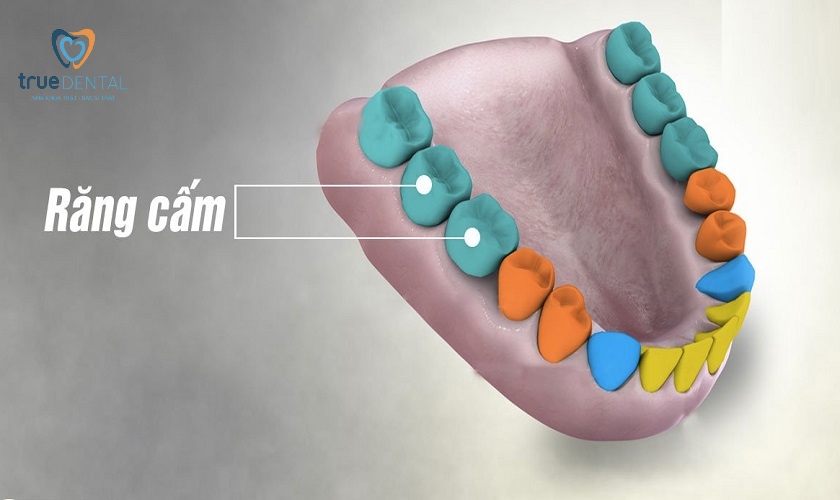
Characterized by broad occlusal tables with multiple cusps and fissures, these molars perform the bulk of food trituration to support healthy digestion. Erupting between ages 6 and 13, they are permanent teeth with no deciduous predecessors—meaning once lost, they never grow back naturally and require dedicated preventive care or prompt prosthetic restoration.
How Much Does Molar Replacement Cost?
Missing a first or second molar compromises both occlusal stability and facial structure. Three primary prosthodontic modalities are used to replace lost molars: dental implant placement, fixed porcelain bridges, and removable partial dentures—each offering distinct clinical trade-offs and price points.
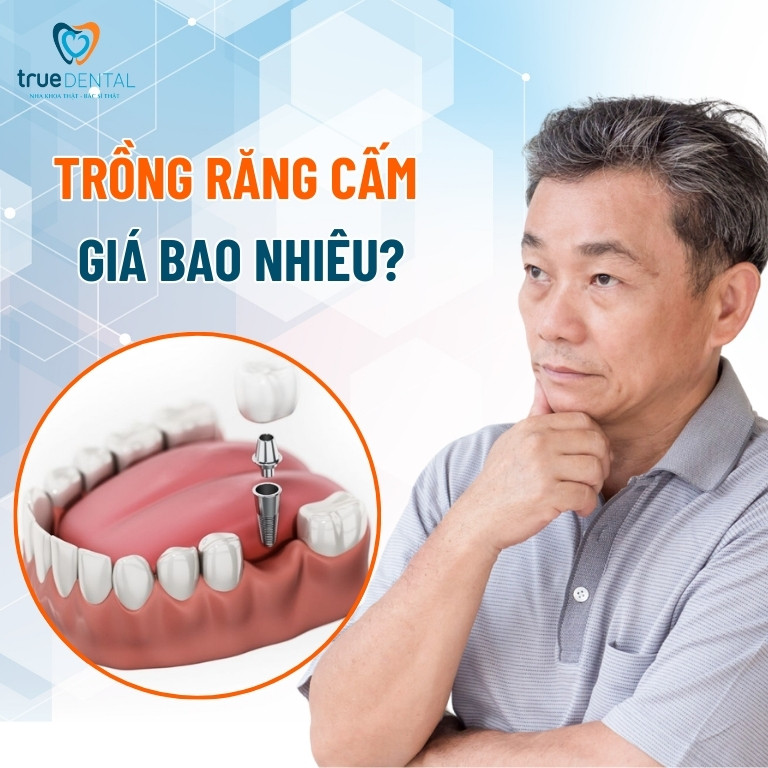
Below is a detailed cost breakdown for each molar restoration option:
How Much Does a Molar Dental Implant Cost?
Total fees for molar dental implant placement depend on the selected fixture system, country of manufacture, and prosthetic crown material. Below is True Dental’s itemized fee schedule by implant brand and crown type:
| Implant System | Origin | Implant Crown Material | Fee (VND / Fixture) |
| STRAUMANN BLX Immediate | Switzerland | All-Ceramic Crown | 48,000,000 |
| NOBEL ACTIVE | USA | All-Ceramic Crown | 42,000,000 |
| STRAUMANN ACTIVE | Switzerland | All-Ceramic Crown | 42,000,000 |
| SWISS | Switzerland | All-Ceramic Crown | 34,000,000 |
| MEGAGEN AR Immediate | South Korea | All-Ceramic Crown | 32,000,000 |
| HIOSSEN | USA | All-Ceramic Crown | 25,800,000 |
| OSSTEM | South Korea | All-Ceramic Crown | 22,800,000 |
| OSSTEM | South Korea | PFM (Titanium) Crown | 21,800,000 |
| BIOTEM | South Korea | All-Ceramic Crown | 20,800,000 |
| BIOTEM | South Korea | PFM (Titanium) Crown | 19,800,000 |
Clinical & Pricing Notes:
- Fees listed reflect True Dental’s published schedule (effective April 2025) and may vary across dental clinics.
- Package prices include both the endosseous implant fixture and the definitive prosthetic crown.
- Swiss and US implant systems deliver superior biocompatibility and carry up to a 30-year manufacturer warranty.
- Long-standing edentulous sites with alveolar bone resorption require 3D CBCT evaluation to determine if preparatory bone grafting or sinus floor elevation is indicated.
How Much Does a Fixed Porcelain Bridge for a Molar Cost?
Fixed dental bridge pricing depends on the number of crown units required (typically a 3-unit bridge to replace one missing molar), ceramic material (monolithic zirconia, layered all-ceramic, or porcelain-fused-to-metal), and the periodontal health of the abutment teeth. While less expensive upfront than an implant, a conventional bridge requires irreversible preparation of at least two adjacent teeth—and cannot be placed if the distal molar (#7) is missing with no posterior abutment tooth behind it.
For an accurate restorative assessment and itemized quote, visit an accredited dental clinic for clinical examination and diagnostic imaging.
How Much Does a Removable Partial Denture Cost?
Removable partial dentures offer an economical, non-surgical option for older adults or patients seeking a budget-conscious solution without tooth preparation. Total fees depend on base material (acrylic resin, flexible polymer, or cast cobalt-chromium/titanium framework) and the number of missing teeth, with select centers offering senior assistance programs.
Is Replacing a Lost First or Second Molar Necessary?
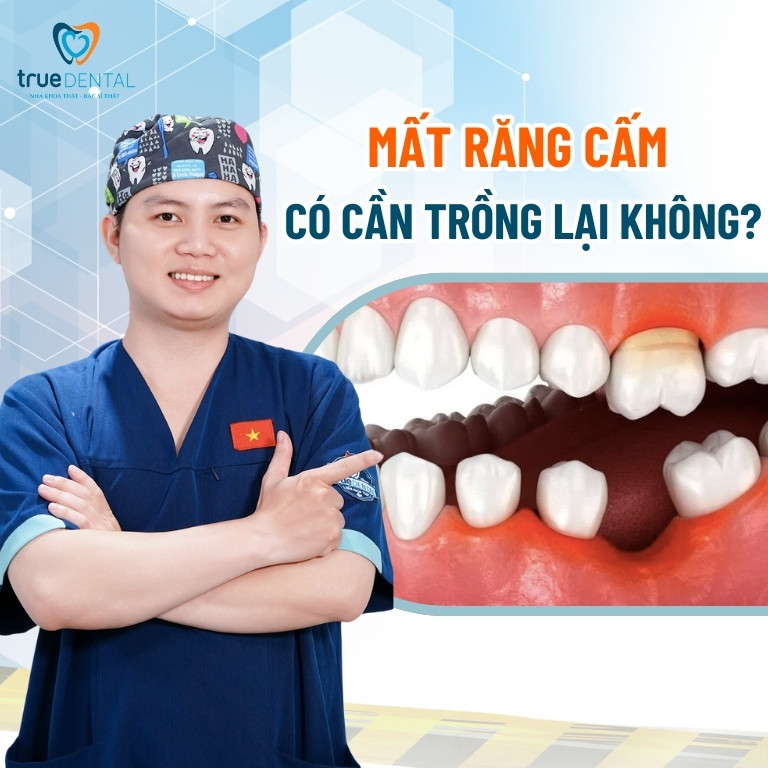
Losing a first or second molar (teeth #6 or #7) is a significant clinical event that requires prompt prosthodontic restoration. Because posterior molars absorb up to 80–90% of occlusal chewing forces and stabilize vertical jaw alignment, leaving a molar space unrestored triggers five progressive complications:
Reduced Masticatory Efficiency & Gastrointestinal Strain
Loss of posterior grinding surfaces impairs mechanical food breakdown, forcing larger food particles into the stomach and increasing susceptibility to gastritis, indigestion, and reduced nutrient absorption.
Alveolar Bone Resorption & Premature Facial Aging
Without functional occlusal stimulation transmitted through the tooth root, the edentulous alveolar ridge undergoes progressive atrophy—leading to gingival recession, sunken cheeks, and premature facial sagging.
Malocclusion & Adjacent Tooth Drifting
Adjacent teeth gradually tilt mesially or distally into the edentulous space while the opposing molar supra-erupts—disrupting occlusal balance, creating traumatic bite interferences, and risking temporomandibular joint (TMJ) discomfort.
Elevated Risk of Caries & Periodontal Disease
Tilted teeth and open interproximal contacts trap plaque and food debris, accelerating gingival inflammation, periodontitis, and root caries on neighboring teeth.
Facial Asymmetry & Reduced Self-Confidence
Unilateral chewing habits and posterior bone loss gradually alter lower facial symmetry, affecting both appearance and daily comfort.
Which Molar Replacement Method Should You Choose?
Selecting the optimal molar restoration involves balancing biomechanical longevity, biological preservation, and budget across three primary options:
- Dental Implant Placement (Gold Standard): A biocompatible titanium fixture replaces the missing root independently, topped with an all-ceramic crown. Implants restore full posterior chewing strength, prevent alveolar bone loss, leave neighboring teeth untouched, and last decades with proper care.
- Fixed Porcelain Bridge: Completed within 1 to 2 weeks at a lower upfront fee than an implant, but requires grinding down healthy adjacent teeth and does not halt bone resorption beneath the pontic.
- Removable Partial Denture: The lowest-cost, non-invasive option, though it offers limited posterior chewing efficiency, feels bulkier, and must be removed daily for cleaning.
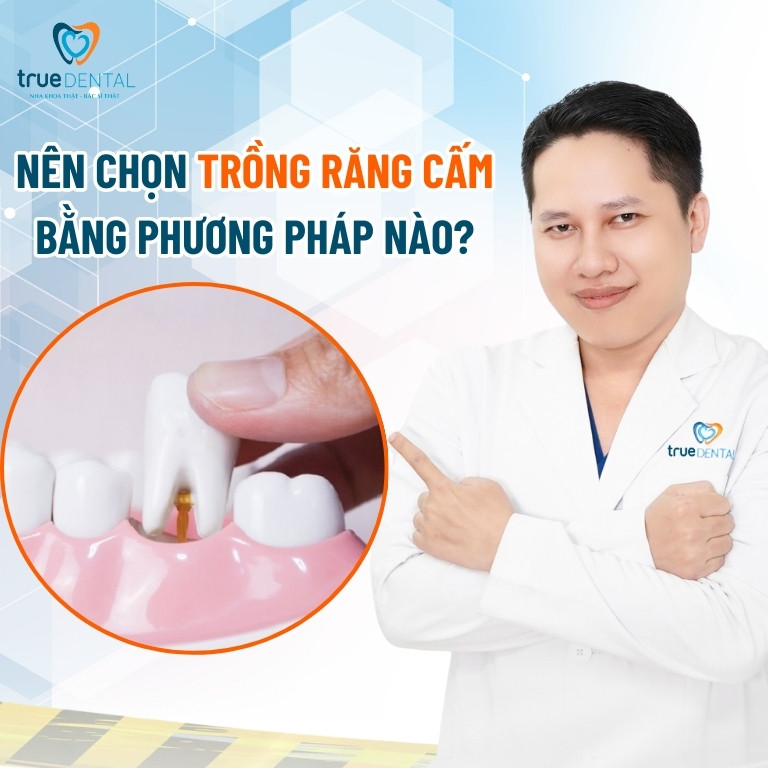
Whenever clinically and financially feasible, dental implant placement is strongly recommended for posterior molars to withstand heavy biting forces and preserve jawbone volume long-term.
Is Molar Replacement Painful?
Patient comfort during molar restoration depends on the chosen procedure, modern surgical technology, and individual pain tolerance.
Prior to dental implant placement or tooth preparation, the clinician administers targeted local anesthesia (or conscious sedation when indicated), ensuring a completely pain-free procedure. Thanks to minimally invasive digital protocols, post-operative discomfort after anesthesia wears off is limited to mild soreness or slight swelling for 1 to 3 days—easily managed with standard prescribed medication.
Choosing an accredited dental center staffed by experienced implantologists and equipped with 3D CBCT and AI-guided surgery ensures safe, gentle, and predictable treatment.
READ MORE:
Molar replacement fees vary depending on whether you select a dental implant, fixed porcelain bridge, or removable partial denture—with dental implants standing out as the most durable, bone-preserving restorative solution. Contact True Dental today to schedule a complimentary 3D examination and personalized specialist consultation!

Sức Khỏe Răng Miệng
How long does it take to complete the process of getting dental implants?
Tooth replacement affects far more than just smile...
Sức Khỏe Răng Miệng
How much does it cost to replace a molar? Which method is most effective?
First and second molars—commonly referred to in Vietnamese...
Sức Khỏe Răng Miệng
How much does it cost to replace a single tooth? 2026 Price List
Tooth replacement is an effective restorative solution for...
Sức Khỏe Răng Miệng
Which country are Nobel dental implants from? How much do they cost?
Nobel Biocare dental implants stand out for rapid...
Sức Khỏe Răng Miệng
Straumann Dental Implants: Features, Origin, and Cost
Straumann dental implants are widely chosen by patients...
Sức Khỏe Răng Miệng
What are dental implants? When are dental implants needed?
Tooth loss affects far more than just smile...
Tôi đang tìm 1 Nha Khoa để điều trị cho tôi, nhưng rất lo lắng và sợ gặp phải NHA TẶC hoặc bị chèo kéo.
HÃY GIÚP TÔI TƯ VẤN THẬT
254 Điện Biên Phủ, Xuân Hòa, TP.HCM
HƯỚNG DẪN ĐƯỜNG ĐI