


 Tiếng Việt
 Русский
In dental implantology, the term Abutment (implant connector) is frequently referenced. So, what is a dental implant abutment? What are its structural anatomy and clinical characteristics? What specific role does it play in dental implant surgery? Let us explore these key aspects in the following article.
What Is a Dental Implant Abutment?
In dentistry, particularly within implant dentistry, an abutment is an intermediate coupling component that serves as a structural connector between the implant fixture (surgically placed into the jawbone) and the overlying prosthetic crown or restoration. In other words, the abutment acts as a crucial link that securely joins the stabilized, osseointegrated implant fixture within the jawbone to the prosthetic tooth restoration above (typically a porcelain crown, fixed dental bridge, or implant-supported overdenture).
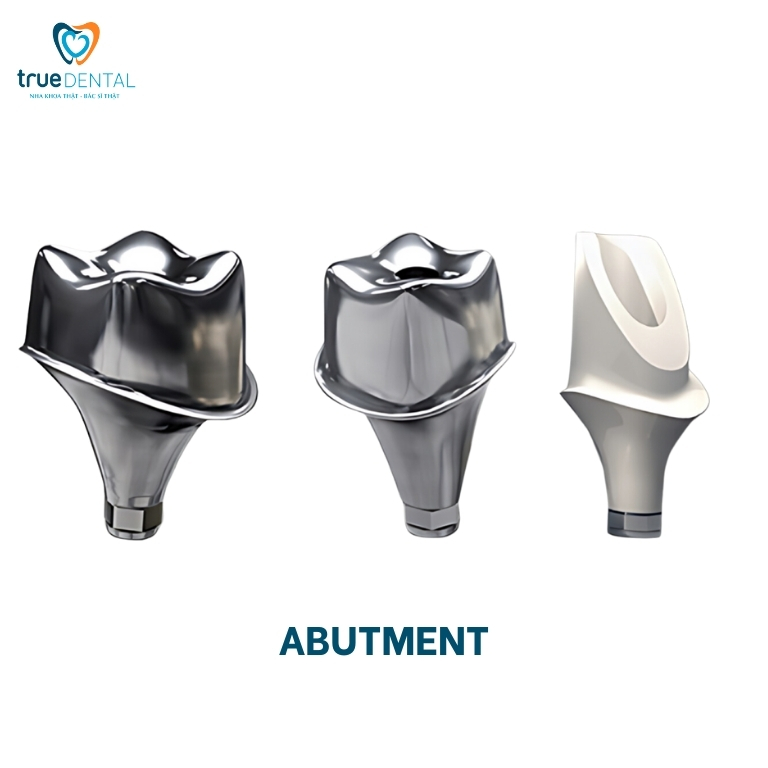
When an edentulous patient undergoes tooth replacement via dental implant therapy, the treatment progresses through two primary clinical phases:
- Surgical Placement Phase: The clinician surgically inserts the implant fixture (typically fabricated from Titanium) into the jawbone. This fixture acts as an artificial tooth root and requires a dedicated healing period to achieve osseointegration and mechanical stability.
- Abutment Connection & Prosthetic Restoration Phase: Once the implant fixture has fully osseointegrated into the jawbone, the clinician attaches the abutment onto the fixture platform. The superior portion of the abutment projects transmucosally through the gingiva, creating a connective platform for the prosthetic porcelain crown to replace the missing natural clinical crown.
READ MORE: WHAT IS PROSTHETIC PORCELAIN RESTORATION OVER IMPLANTS? CLINICAL WORKFLOW AND ESSENTIAL INSIGHTS
Structural Anatomy of a Dental Implant Abutment
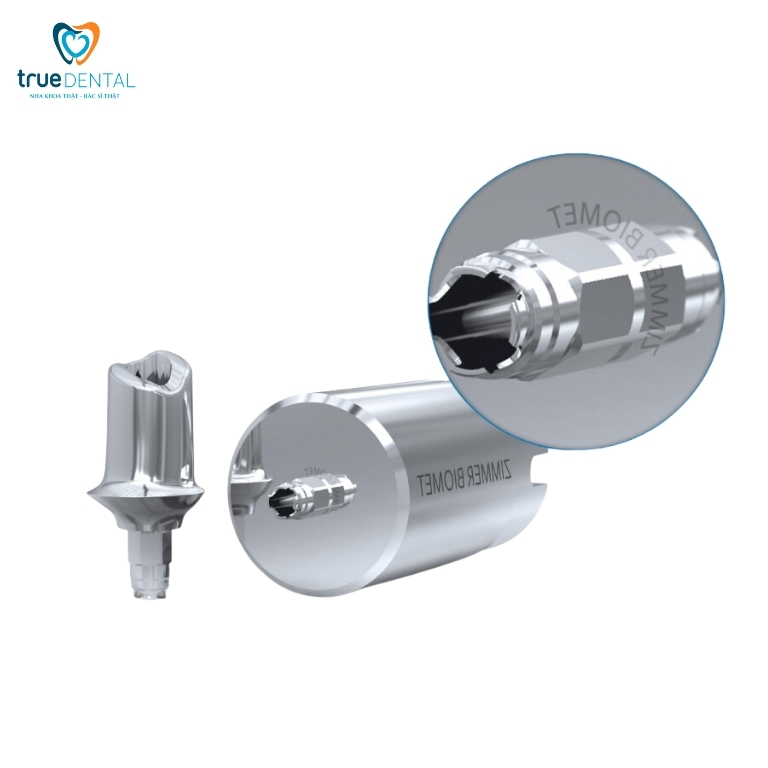
Structurally, an abutment is engineered as a specialized post consisting of two connecting ends and an internal retaining screw, designed to form a precise mechanical union between the implant fixture and the prosthetic crown to construct a complete functional tooth unit:
- Inferior Connection Platform (Implant-Interface Portion): After the implant fixture has achieved solid osseointegration within the jawbone (typically taking several months), the clinician secures the abutment connector onto the fixture platform. The inferior interface of the abutment is precision-machined to fit flush into the internal connection of the implant fixture, ensuring a rigid connection without mechanical loosening.
- Superior Connection Post (Prosthetic-Interface Portion): The upper post of the abutment extends above the gingival margin, housing the internal channel for the abutment screw to pass through and secure the porcelain crown (or other prosthetic restoration). This post serves to seat and stabilize the crown in ideal anatomical alignment, preventing micro-displacement and ensuring effective masticatory function.
- Abutment Retaining Screw: The internal retaining screw accompanying the abutment provides mechanical fixation, threading tightly into the internal chamber of the implant fixture. This screw is tightened only after successful osseointegration is confirmed, ensuring the implant restoration is fully integrated and functioning harmoniously within the oral cavity.
Clinical Characteristics of a Dental Implant Abutment
The abutment is an indispensable structural component in implant prosthodontics, establishing the connection between the endosseous fixture and the final crown. When evaluating genuine abutment components manufactured by reputable global brands, True Dental highlights the following key clinical features:
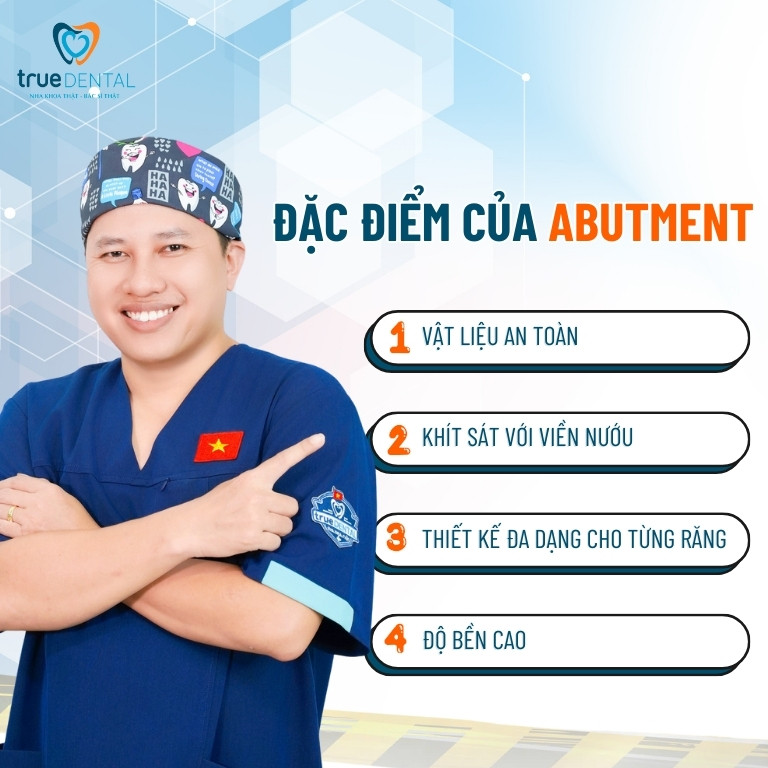
- Biocompatible Materials: Genuine abutments are manufactured from Grade 4 Titanium, Zirconia (high-strength ceramic), or precious metal alloys. These medical-grade materials are biologically inert and highly biocompatible, preventing gingival irritation and resisting electrochemical corrosion within the oral cavity.
- Precision Gingival Emergence & Margin Seal: High-precision manufacturing ensures micro-gap free seating between the abutment and implant platform, establishing a tight seal along the gingival margin. This tight fit minimizes bacterial microleakage beneath the crown, protecting the underlying peri-implant tissues and reducing the risk of peri-implant disease.
- Versatile Designs for Specific Tooth Positions: Each tooth position exhibits distinct aesthetic requirements and occlusal force distributions. Consequently, abutments are manufactured in various angulations, collar heights, and emergence profiles to optimize compatibility for molar or anterior restorations. As a result, the prosthetic crown seated on the abutment displays a natural emergence profile and stable masticatory function.
- Exceptional Structural Durability: When torqued securely onto the implant fixture, a genuine abutment delivers long-term clinical serviceability, often lasting a lifetime under proper maintenance and oral hygiene.
The Clinical Role of an Abutment in Dental Implant Therapy
As noted previously, throughout dental implant therapy, the abutment serves as a critical structural bridge connecting individual restorative components into a unified prosthetic tooth. Through its specialized engineering, the abutment not only ensures the mechanical stability of the porcelain crown but also optimizes masticatory performance and soft tissue aesthetics.
To provide further insight, below are the primary clinical roles of an abutment in dental implant surgery:
- Connecting the Implant Fixture to the Porcelain Crown: The abutment functions as a precision connector, rigidly joining the endosseous implant fixture within the jawbone to the coronal porcelain crown, creating a complete prosthetic tooth assembly.
- Ensuring Masticatory Function and Aesthetics: Designed to match specific edentulous sites, the abutment holds the porcelain crown in stable position without rotation or micro-displacement, ensuring the restored tooth withstands physiological occlusal loads equivalent to natural dentition.
- High Biocompatibility: Fabricated from medical-grade Titanium, Zirconia, or gold alloys, abutments exhibit excellent soft tissue compatibility, minimizing inflammatory responses in peri-implant mucosal tissues.
- Enhancing Restoration Durability and Longevity: Because it is securely torqued to the implant fixture, the abutment offers extended clinical longevity matching that of the fixture, enhancing the overall survival rate of the dental implant restoration.

In summary, the abutment plays a pivotal role in coupling the implant fixture to the prosthetic porcelain crown, securing structural stability, masticatory function, and gingival aesthetics to achieve optimal restorative outcomes.
Key Clinical Considerations When Selecting an Abutment
Selecting the appropriate abutment connector is a crucial factor governing the clinical success of an implant restoration. As each case of tooth loss presents unique anatomical parameters, several factors must be evaluated to ensure optimal abutment performance. Below are essential guidelines when selecting an abutment:
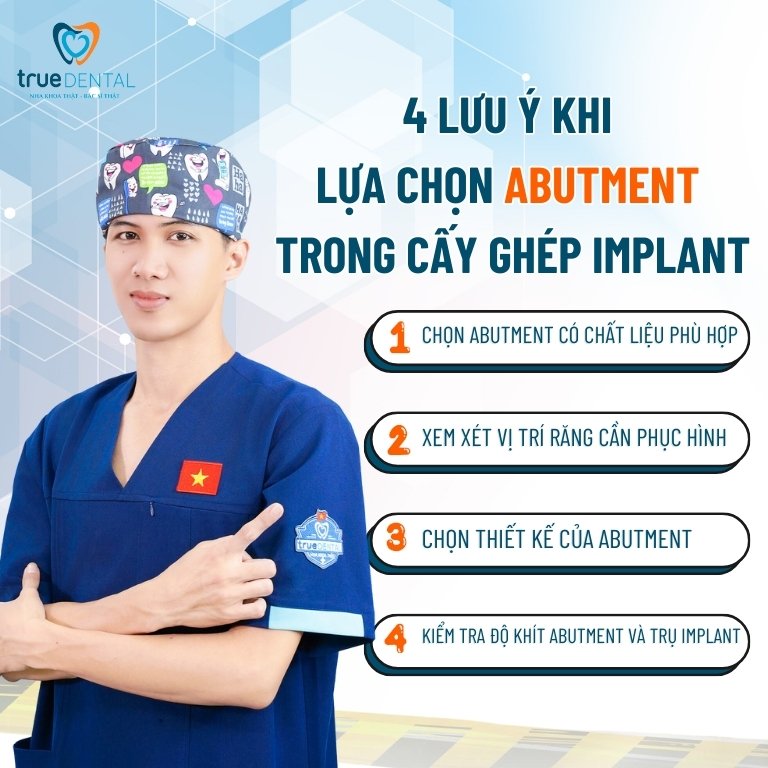
- Select the Appropriate Abutment Material: The material composition dictates mechanical strength, fatigue resistance, and biocompatibility. Titanium is widely favored for its high tensile strength and load-bearing capacity, making it ideal for posterior molar regions. Zirconia is preferred in the aesthetic zone due to its tooth-colored translucency.
- Evaluate the Anatomical Position of the Missing Tooth: The tooth position heavily dictates abutment selection. Anterior restorations require high aesthetic emergence profiles and translucency. Conversely, posterior molar sites subjected to heavy occlusal loads demand high-strength materials and wider platform dimensions to ensure structural integrity.
- Consider Abutment Design Options (Stock vs. Custom): Stock abutments are prefabricated in standardized dimensions and offer a cost-effective solution for straightforward restorative cases. However, for sites requiring ideal margin placement, optimal emergence profile, and high aesthetic outcomes, custom-milled (CAD/CAM) abutments are indicated to match the patient’s specific gingival architecture and tooth morphology.
- Verify the Precision of the Implant-Abutment Interface: Ensure the abutment platform geometry matches the specific internal connection of the implant fixture to achieve a precision fit. Selecting an abutment with a precise micro-gap seal prevents screw loosening, reduces bacterial microleakage, and lowers the incidence of peri-implantitis, thereby extending the longevity of the implant restoration.
In conclusion, the abutment is an indispensable component of dental implant therapy. Gaining a thorough understanding of its anatomical structure, characteristics, and clinical roles enables patients to make informed decisions regarding their treatment. For detailed consultations regarding dental implant procedures, contact True Dental today via our hotline 090 6636 456.

Sức Khỏe Răng Miệng
How long does it take to complete the process of getting dental implants?
Tooth replacement affects far more than just smile...
Sức Khỏe Răng Miệng
How much does it cost to replace a molar? Which method is most effective?
First and second molars—commonly referred to in Vietnamese...
Sức Khỏe Răng Miệng
How much does it cost to replace a single tooth? 2026 Price List
Tooth replacement is an effective restorative solution for...
Sức Khỏe Răng Miệng
Which country are Nobel dental implants from? How much do they cost?
Nobel Biocare dental implants stand out for rapid...
Sức Khỏe Răng Miệng
Straumann Dental Implants: Features, Origin, and Cost
Straumann dental implants are widely chosen by patients...
Sức Khỏe Răng Miệng
What are dental implants? When are dental implants needed?
Tooth loss affects far more than just smile...
Tôi đang tìm 1 Nha Khoa để điều trị cho tôi, nhưng rất lo lắng và sợ gặp phải NHA TẶC hoặc bị chèo kéo.
HÃY GIÚP TÔI TƯ VẤN THẬT
254 Điện Biên Phủ, Xuân Hòa, TP.HCM
HƯỚNG DẪN ĐƯỜNG ĐI