


 Tiếng Việt
 Русский
Dental bone grafting is an essential surgical procedure used to regenerate resorbed alveolar bone, establishing a dense, stable foundation for osseointegration and ensuring optimal masticatory function and facial aesthetics. This technique is indicated when patients have experienced prolonged edentulism or present with an inadequate alveolar ridge width or height. Explore the clinical details of dental bone grafting in this comprehensive guide from True Dental.
What Is Dental Bone Grafting in Implant Dentistry?
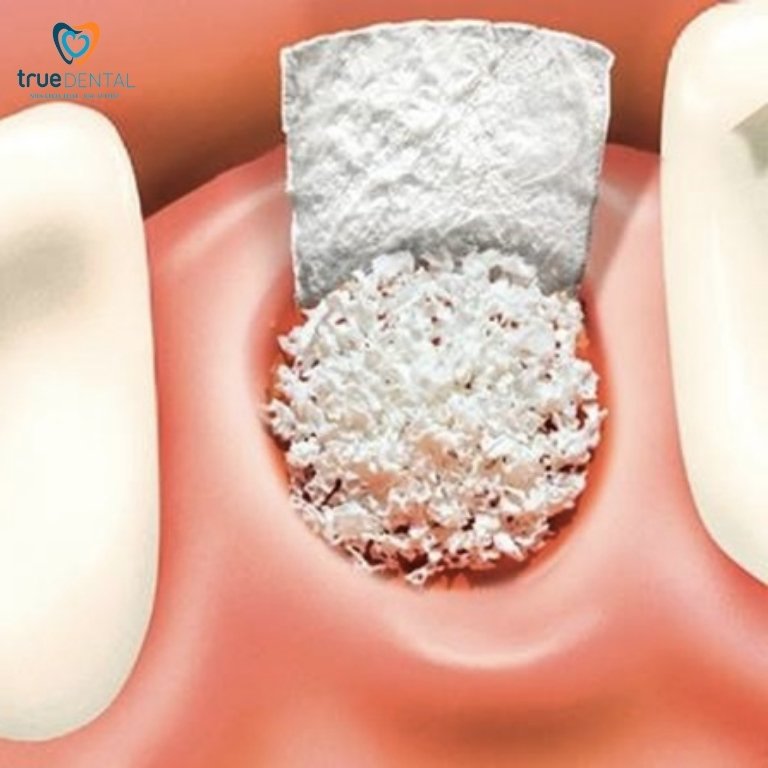
Dental bone grafting (Guided Bone Regeneration – GBR) is a surgical modality designed to augment and regenerate lost jawbone volume and density so an implant fixture can achieve rigid primary stability. During the procedure, the clinician reflects a mucoperiosteal flap, places biocompatible bone graft material into the defect, and stabilizes it with a specialized barrier membrane.

Depending on the degree of ridge deficiency, bone augmentation is performed either as a staged pre-prosthetic procedure or simultaneously with implant placement—significantly improving long-term implant survival rates, soft-tissue emergence profiles, and natural chewing efficiency.
How Is Dental Bone Grafting Performed?
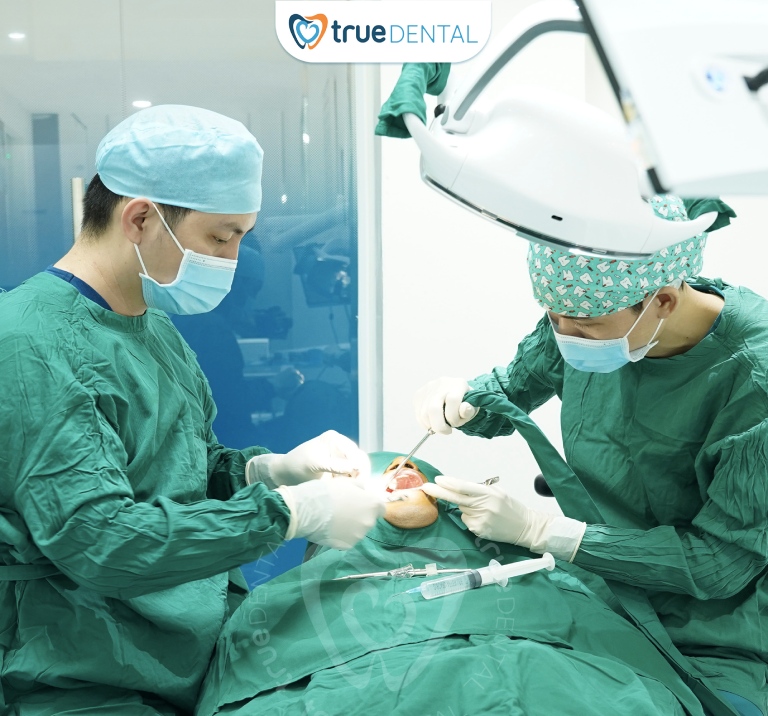
Dental bone grafting follows a standardized aseptic protocol to rebuild deficient alveolar architecture prior to or during implant surgery. First, the surgeon administers effective local anesthesia and reflects a full-thickness mucoperiosteal flap to expose the resorbed bone site. Particulate or block graft material—whether autogenous, allogeneic, xenogeneic, or alloplastic—is compacted into the bony defect.
Next, a specialized barrier membrane is adapted over the graft to stabilize the particulate matrix and prevent rapid epithelial or soft-tissue ingrowth (guided tissue/bone regeneration). Finally, tension-free primary closure is achieved with sutures, allowing biological bone remodeling and graft maturation over several months.
Clinical Indications: When Is Bone Grafting Needed Before Implant Surgery?
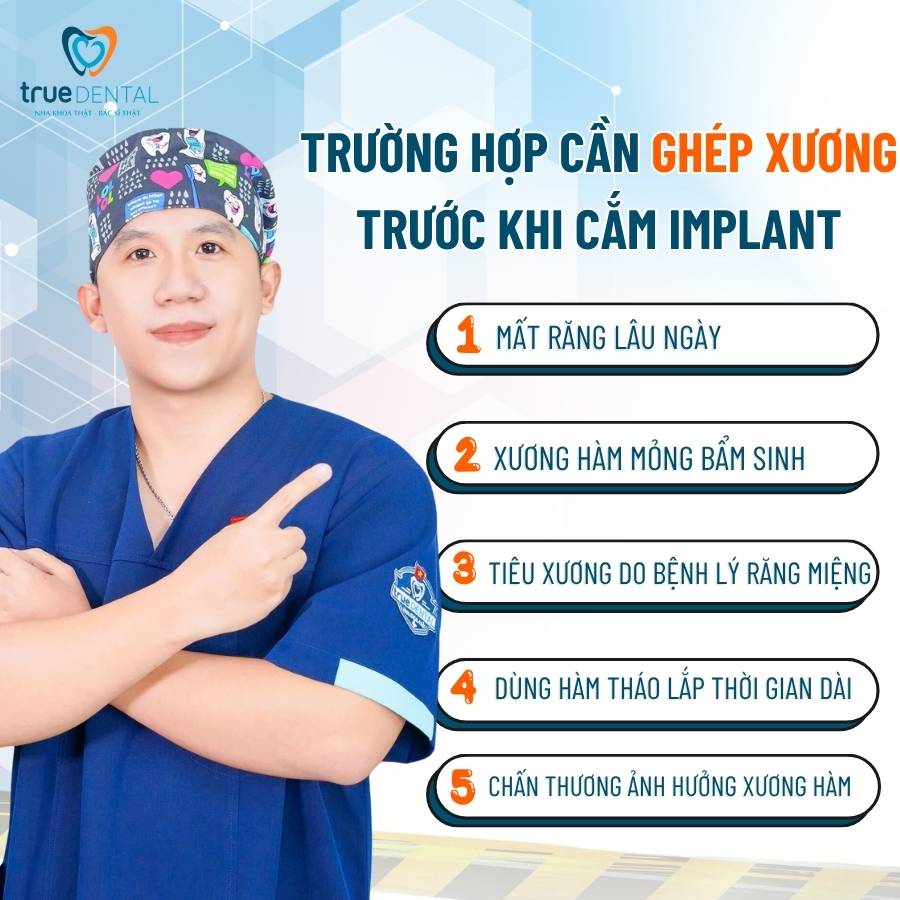
Bone augmentation is indicated whenever existing alveolar ridge height, width, or trabecular density is insufficient to house an endosseous implant safely. Common clinical scenarios include:
- Prolonged Edentulism (Long-Term Tooth Loss): Following tooth extraction, the alveolar ridge undergoes significant horizontal and vertical resorption due to the loss of functional periodontal stimulation, leaving insufficient bone volume for primary implant anchorage.
- Congenitally Thin or Low-Density Alveolar Bone: Patients with a naturally narrow buccal-lingual ridge profile or porous Type D4 trabecular bone require augmentation to prevent fenestration, dehiscence, or early implant failure.
- Bone Loss Secondary to Oral Pathology: Advanced periodontitis, chronic periapical lesions, or odontogenic cysts can destroy supporting alveolar bone, necessitating regenerative grafting prior to implant rehabilitation.
- Long-Term Use of Removable Dentures or Bridges: Continuous mucosal pressure from removable prostheses—or lack of bone stimulation beneath fixed bridge pontics—accelerates progressive ridge atrophy.
- Previous Maxillofacial Trauma or Surgical Resection: Bone defects resulting from facial trauma or prior surgical procedures require structural reconstruction before endosseous implants can be placed.
Contraindications: Who Should Avoid Dental Bone Grafting?
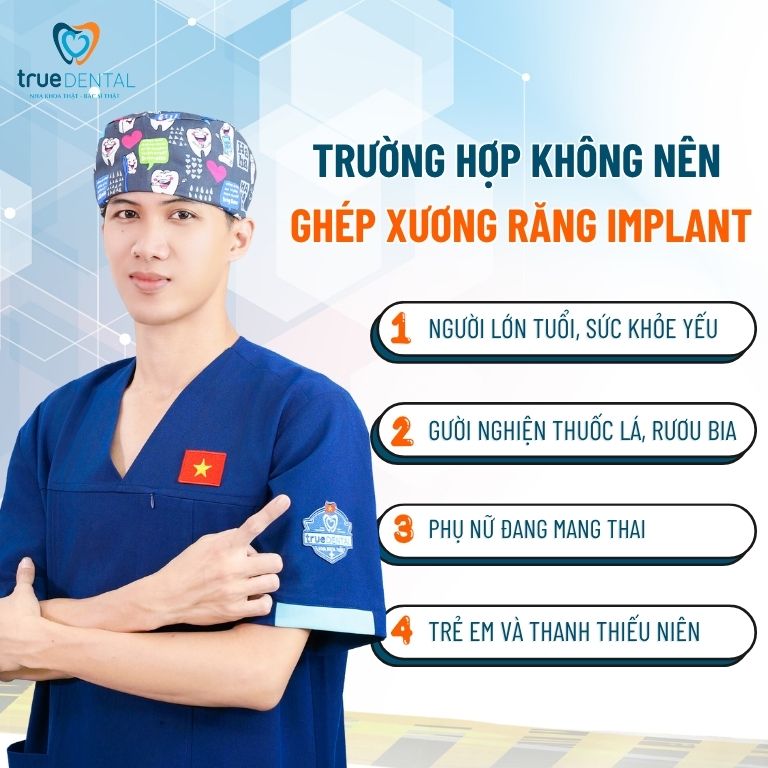
While bone grafting creates a predictable foundation for implants, it is not suitable for every patient. Key medical and anatomical contraindications include:
- Compromised Systemic Health or Uncontrolled Chronic Illness: Patients with poorly controlled diabetes mellitus, severe cardiovascular disease, active malignancy, renal insufficiency, or immunocompromised states face impaired angiogenesis, delayed wound healing, and elevated graft infection risks.
- Heavy Tobacco Smokers and Chronic Alcohol Users: Nicotine causes potent peripheral vasoconstriction, starving the healing bone graft of oxygen and nutrients and substantially increasing graft failure rates.
- Pregnant Patients: Elective surgical procedures, radiographic imaging, local anesthetics, and post-operative antibiotics should be deferred until after pregnancy to protect maternal and fetal safety.
- Children and Adolescents with Incomplete Skeletal Growth: In patients under 17–18 years of age, craniofacial and alveolar growth is still ongoing; premature grafting or implant placement can interfere with normal skeletal development.
Types of Barrier Membranes Used in Guided Bone Regeneration
Barrier membranes play a critical role in Guided Bone Regeneration (GBR) by immobilizing graft particles and excluding fast-growing soft-tissue fibroblasts so slower-growing osteoblasts can populate the defect.
Barrier membranes are categorized into two primary groups:
Resorbable Barrier Membranes
- Fabricated from purified natural or cross-linked porcine/bovine collagen, featuring a porous micro-architecture that supports angiogenesis and tissue integration.
- Biodegrade naturally within 2 to 3 months—aligning with early bone remodeling—thereby eliminating the need for a second surgical removal procedure and reducing morbidity.
- Key clinical advantages include superior biocompatibility, easy chairside trimming and adaptation, promotion of soft-tissue healing, and simplified handling.
Non-Resorbable Barrier Membranes
- Include high-density polytetrafluoroethylene (d-PTFE), titanium-reinforced PTFE membranes, and custom 3D titanium meshes.
- Provide superior space-maintaining rigidity against external masticatory or soft-tissue pressure, ideal for large vertical or horizontal ridge augmentations.
- Require a secondary minor surgical procedure to remove the membrane once graft maturation is complete.
4 Common Types of Dental Bone Graft Materials
Depending on defect morphology and clinical requirements, implantologists select from four established categories of bone graft biomaterials:

Alloplastic Graft (Synthetic Bone Substitute)
Composed of biocompatible synthetic bioceramics such as hydroxyapatite (HA) or beta-tricalcium phosphate (β-TCP) that act as an osteoconductive scaffold. Advantages include zero risk of disease transmission or allergic reaction, unlimited supply, and no secondary donor-site surgery.
Autogenous Graft (Autograft)
Harvested directly from the patient’s own skeleton (such as the mandibular symphysis, ascending ramus, or iliac crest). Considered the biological gold standard because it provides osteogenic, osteoinductive, and osteoconductive properties with zero immunogenicity, though it requires a secondary donor-site incision.
Allogeneic Graft (Allograft)
Derived from screened, freeze-dried, and sterilized human donor bone (FDBA or DFDBA). Eliminates donor-site morbidity while serving as an effective osteoconductive—and partially osteoinductive—scaffold for host bone regeneration.
Xenogeneic Graft (Xenograft)
Processed, deproteinized mineral bone matrix derived from bovine or porcine sources. Xenografts offer exceptional biocompatibility, slow resorption rates, and superior long-term ridge volume maintenance without requiring a donor site.
Timing: When Is Bone Grafting Performed During Implant Treatment?
Depending on baseline alveolar ridge dimensions, bone grafting is scheduled according to one of two clinical protocols:
Staged Bone Grafting (Prior to Implant Placement)
Indicated when severe vertical or horizontal bone loss prevents primary mechanical stability of the implant. Bone augmentation is performed first, followed by a 3- to 6-month maturation period until dense, vascularized bone forms—ensuring predictable, high-success implant placement.
Simultaneous Bone Grafting (During Implant Placement)
When a minor localized dehiscence or fenestration is present—yet sufficient native bone remains to achieve rigid primary stability—bone grafting is performed concurrently with fixture insertion, reducing total treatment time and surgical visits.
Is Dental Bone Grafting Painful?
Dental bone grafting is performed comfortably without intraoperative pain thanks to effective local anesthesia (or conscious sedation when indicated), ensuring a stress-free patient experience.
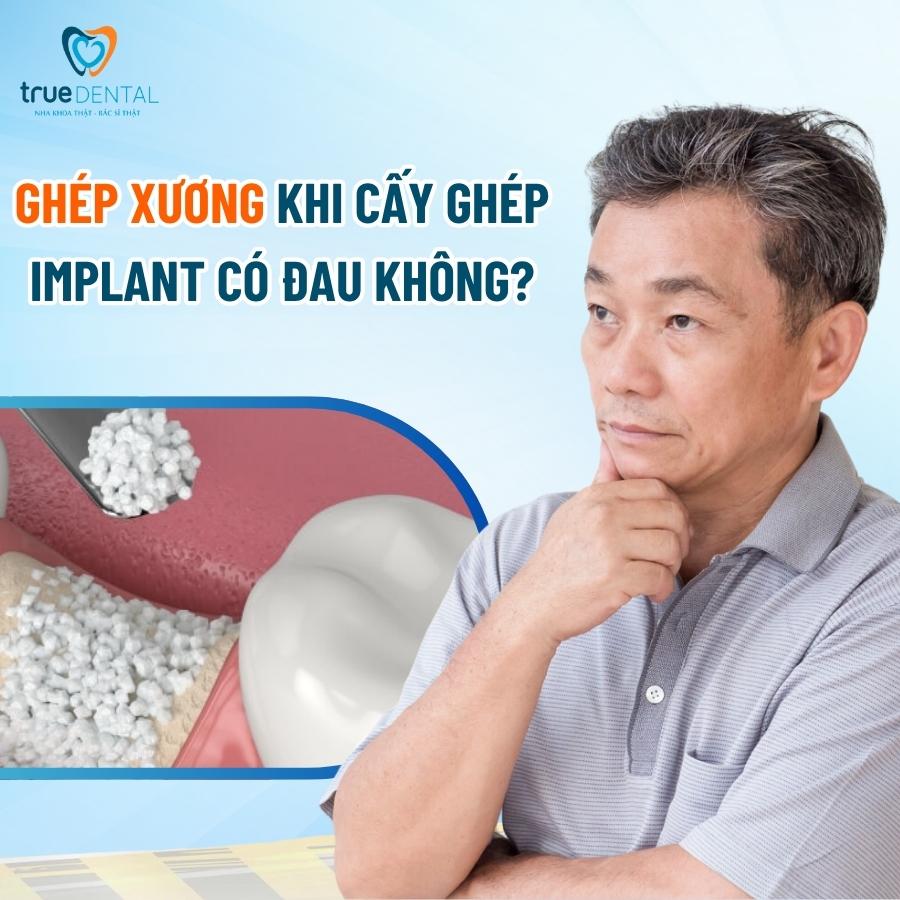
Once local anesthesia subsides, mild localized soreness, tightness, or swelling is a normal inflammatory healing response during the first 24 to 48 hours and is easily managed with prescribed analgesics and anti-inflammatory medications.
How Long Does a Dental Bone Graft Take to Heal?
Complete biological graft consolidation typically requires 3 to 6 months, depending on defect size, graft material, and individual healing capacity. On average, mandibular grafts mature within 3 to 4 months, while less-dense maxillary bone requires 4 to 6 months before implant placement.
4-Step Clinical Protocol for Pre-Implant Bone Grafting
At True Dental, pre-prosthetic bone augmentation follows a rigorous 4-step clinical protocol:
Step 1: Clinical Examination, 3D CBCT Scan & Treatment Planning
The specialist evaluates oral health and analyzes 3D Cone Beam CT imaging to quantify exact bone dimensions, anatomical landmarks, and graft volume requirements.
Step 2: Preoperative Blood Screening
Routine blood tests assess coagulation profiles, complete blood count, hepatic/renal function, and blood glucose levels to ensure complete surgical safety.
Step 3: Surgical Bone Augmentation
Under sterile conditions and local anesthesia, the surgeon reflects a mucoperiosteal flap, performs cortical decortication to stimulate angiogenesis, packs the selected bone graft material into the defect, covers it with a barrier membrane, and secures tension-free sutures.
Step 4: Post-Operative Follow-Up & Maturation Monitoring
Scheduled clinical and radiographic follow-ups monitor soft-tissue closure and confirm graft mineralization prior to scheduling implant placement (typically at 3 to 6 months).
How Much Does Dental Bone Grafting Cost?
On average, dental bone grafting costs between 4,000,000 and 15,000,000 VND per site, depending on graft biomaterial selection, defect severity, surgical complexity, and the number of sites treated:
- Synthetic / Xenogeneic Particulate Bone Graft: Typically ranges from 4,000,000 to 8,000,000 VND per site, or 11,000,000 to 15,000,000 VND when combined with a collagen barrier membrane or titanium mesh.
- Autogenous Block Bone Graft: Because it involves harvesting bone from an intraoral or extraoral donor site, fees generally start from 20,000,000 VND and up.
Because individual bone volume and anatomical needs vary, an in-person consultation with 3D CBCT evaluation at an accredited dental clinic is essential for an accurate treatment quote.
Pre- and Post-Operative Care Guidelines for Bone Grafting
Following evidence-based preoperative preparation and post-operative aftercare is vital to prevent membrane exposure or graft infection:
Pre-Operative Instructions
- Complete comprehensive medical screening and 3D CBCT imaging for accurate surgical planning.
- Abstain from tobacco smoking and alcohol for at least 7 days prior to surgery to protect microvascular blood flow.
- Disclose all current medications—especially anticoagulants or antiplatelet agents—to your clinician.
- Maintain balanced nutrition and adequate rest to optimize immune and healing capacity.
Post-Operative Care Instructions
- Rest quietly for the first 24 to 48 hours and avoid strenuous physical exertion or excessive jaw movement.
- Apply external cold compresses over the cheek intermittently during the first 48 hours to minimize edema, transitioning to warm compresses after day 3 if needed.
- Follow a cool liquid diet on day 1, progressing to soft, lukewarm foods for 1 to 2 weeks while avoiding hard, crunchy, or spicy items.
- Complete the full course of prescribed antibiotics and analgesics strictly as directed.
- Maintain gentle oral hygiene—rinse softly with warm saline or prescribed chlorhexidine starting day 2 (without vigorous spitting), and avoid brushing directly over the surgical sutures for at least 7 days.
- Attend all scheduled follow-up visits so your specialist can monitor graft healing and suture removal.
READ MORE:
Dental bone grafting is a cornerstone regenerative procedure for patients with alveolar ridge resorption who require a solid foundation for endosseous implants. With modern biomaterials and minimally invasive techniques, bone augmentation is safe, comfortable, and highly predictable when executed by experienced specialists.
Because treatment costs and timelines depend on your specific bone profile and graft material selection, visit True Dental today for a complimentary 3D examination and personalized consultation with our implantology specialists!

Sức Khỏe Răng Miệng
How long does it take to complete the process of getting dental implants?
Tooth replacement affects far more than just smile...
Sức Khỏe Răng Miệng
How much does it cost to replace a molar? Which method is most effective?
First and second molars—commonly referred to in Vietnamese...
Sức Khỏe Răng Miệng
How much does it cost to replace a single tooth? 2026 Price List
Tooth replacement is an effective restorative solution for...
Sức Khỏe Răng Miệng
Which country are Nobel dental implants from? How much do they cost?
Nobel Biocare dental implants stand out for rapid...
Sức Khỏe Răng Miệng
Straumann Dental Implants: Features, Origin, and Cost
Straumann dental implants are widely chosen by patients...
Sức Khỏe Răng Miệng
What are dental implants? When are dental implants needed?
Tooth loss affects far more than just smile...
Tôi đang tìm 1 Nha Khoa để điều trị cho tôi, nhưng rất lo lắng và sợ gặp phải NHA TẶC hoặc bị chèo kéo.
HÃY GIÚP TÔI TƯ VẤN THẬT
254 Điện Biên Phủ, Xuân Hòa, TP.HCM
HƯỚNG DẪN ĐƯỜNG ĐI