


 Tiếng Việt
 Русский
Dental implant impression-taking is a critical, indispensable step in the implant-supported prosthetic restoration workflow. How is this clinical procedure performed, and what impression techniques are utilized? Explore this comprehensive guide from True Dental for detailed clinical insights.
What Is a Dental Implant Impression?
A dental implant impression—also referred to as an implant prosthetic transfer impression—is an essential clinical procedure performed once the implant fixture has achieved full osseointegration with the host jawbone. This step captures the exact 3D spatial coordinates, angulation, emergence profile, and platform geometry of the integrated implant.
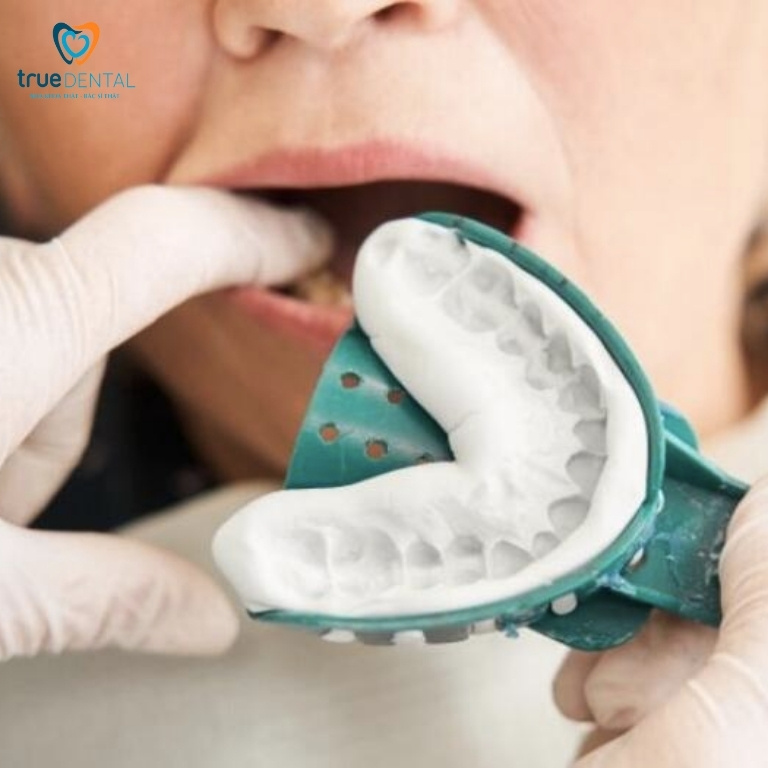
Accurate implant impressions enable dental technicians to fabricate implant-supported porcelain prostheses—including single crowns, fixed dental bridges, or full-arch restorations—with passive fit and anatomical precision. With modern advancements, particularly 3D intraoral optical scanning, impression accuracy and clinical efficiency have improved dramatically, reducing chairside turnaround times and optimizing patient comfort.
The Clinical Importance of Implant Impressions
Implant impression-taking plays a decisive role in prosthetic rehabilitation, directly governing the long-term biomechanical and biological success of dental implant therapy. Capturing exact anatomical and fixture-level data allows the restorative team to engineer a prosthesis that harmonizes seamlessly with surrounding dentition, ensuring marginal seal integrity, natural aesthetics, and balanced occlusal function.
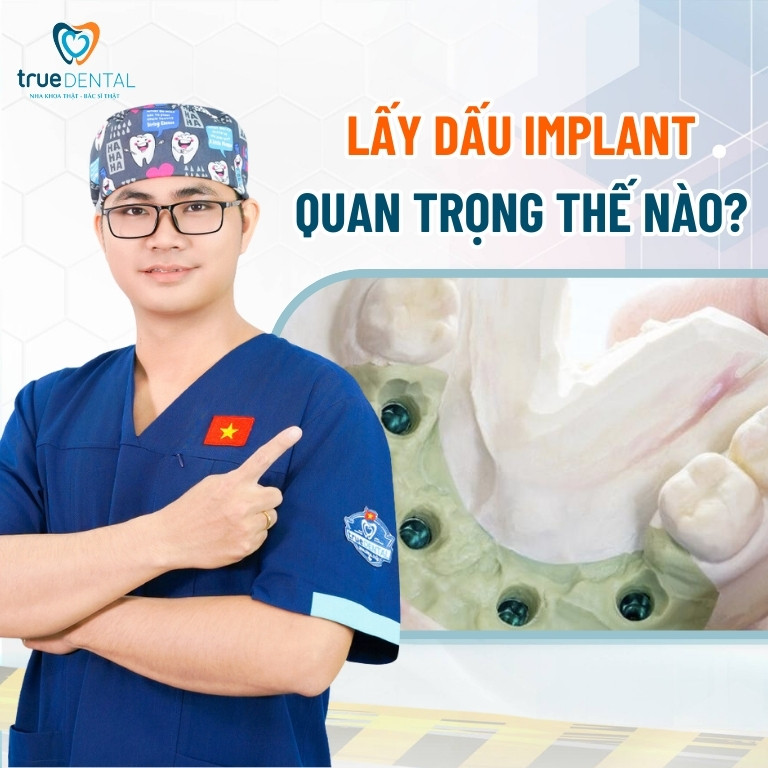
Conversely, inaccuracies during impression capture can lead to severe clinical complications. A prosthesis lacking a passive fit generates micro-gaps and uneven occlusal stress distribution, triggering gingival inflammation, screw loosening, peri-implantitis, or progressive crestal bone loss and fixture failure. Furthermore, distorted impressions compromise prosthetic emergence contours and interproximal contacts, resulting in unnatural aesthetics.
Additionally, precision impression data streamlines laboratory fabrication and minimizes chairside occlusal adjustments during crown delivery—saving valuable clinical time for both the specialist and the patient.
Consequently, selecting an accredited dental center equipped with experienced prosthodontists and advanced digital impression technology is crucial for achieving predictable restorative outcomes.
Dental Implant Impression Techniques
Currently, two primary methodologies are utilized to capture dental implant impressions: conventional elastomeric impression techniques and modern digital 3D intraoral scanning. Each approach presents distinct clinical characteristics depending on case complexity and available technology.
Conventional Impression Technique
The conventional method utilizes physical impression materials—such as polyvinyl siloxane (PVS) or polyether elastomers—paired with open-tray or closed-tray impression copings to record a negative physical mold of the dental arch. This traditional technique remains widely used due to lower equipment costs and familiar handling.
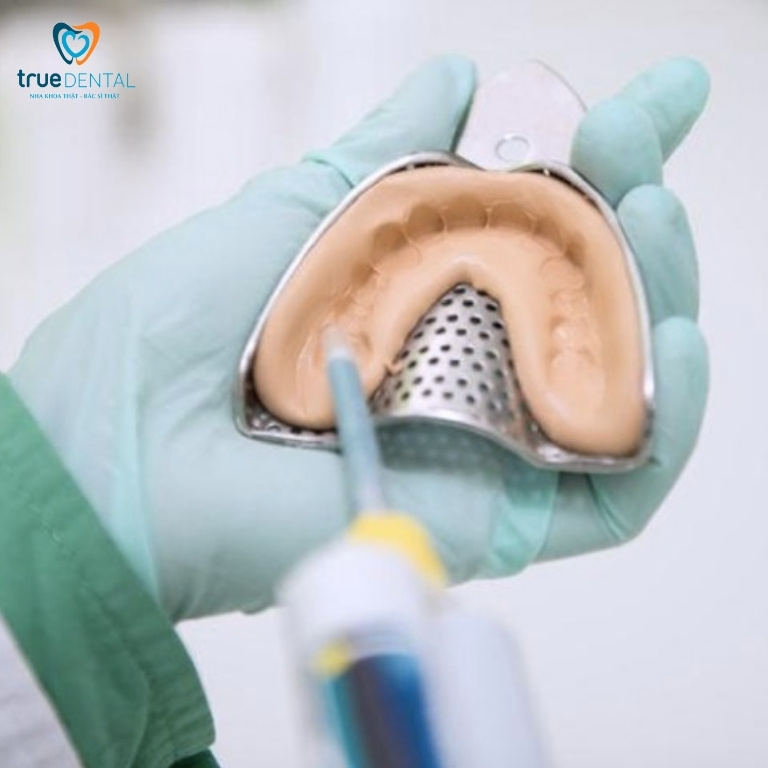
However, conventional impressions carry notable limitations, including potential dimensional shrinkage or distortion of elastomeric materials during setting and laboratory transport. Moreover, bulky impression trays filled with viscous material can trigger gag reflexes and patient discomfort.
Modern Digital 3D Intraoral Scanning
Digital 3D intraoral scanning represents the gold standard in contemporary implant prosthodontics. Replacing physical impression trays and putty, a high-precision optical scanner coupled with a titanium or PEEK scan body captures real-time 3D digital geometry of the dental arch, soft tissue emergence profile, and exact implant platform orientation.
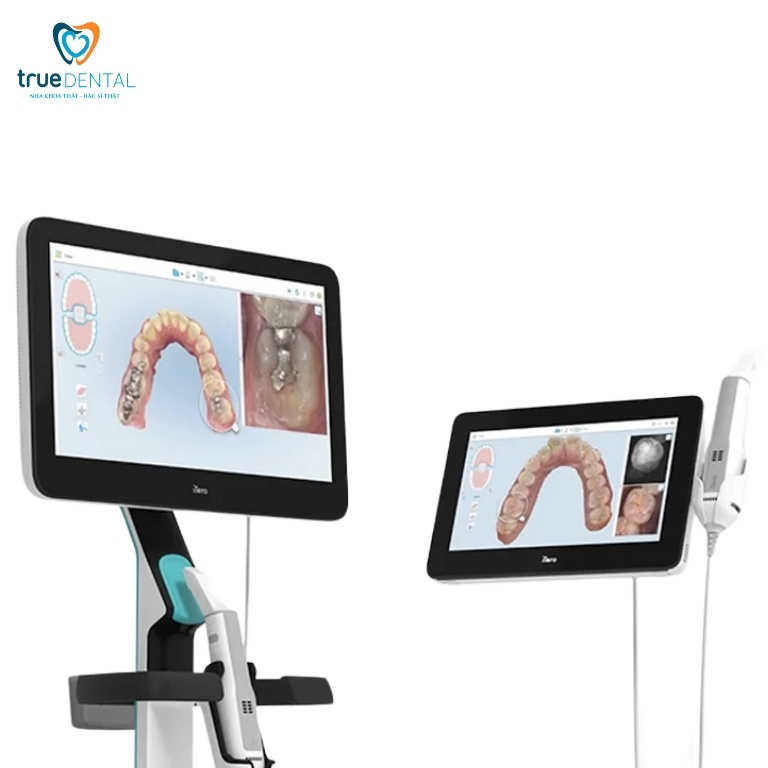
Digital scanning delivers superior micron-level accuracy compared to conventional molds while significantly reducing chairside time and eliminating tray-induced discomfort. Furthermore, real-time 3D visualization enables the clinician to inspect scan margins immediately and rescan specific zones instantaneously if needed.
Dental Implant Impression Workflow at True Dental
At True Dental, we execute a medically standardized implant impression protocol combining specialist clinical expertise with cutting-edge digital technology to deliver superior restorative precision. The workflow consists of four sequential clinical steps:
- Clinical Evaluation and Preparation: The specialist verifies complete osseointegration of the implant fixture and inspects peri-implant soft tissue health to confirm the absence of mucositis or inflammation. The healing abutment is removed, and the internal connection is thoroughly cleansed prior to impression capture.
- Digital or Conventional Impression Capture: Depending on the restorative design, the clinician attaches a precision scan body and utilizes an advanced 3D intraoral scanner to record high-resolution digital data of the dental arch, opposing occlusion, and exact fixture coordinates.
- CAD/CAM Prosthesis Fabrication: The digital STL files are transmitted directly to our dental laboratory, where master technicians utilize CAD/CAM technology to design and mill a bespoke abutment and porcelain crown engineered for exact marginal adaptation, natural shade matching, and optimal occlusal anatomy.
- Definitive Prosthesis Delivery: Once fabricated, the specialist seats the final porcelain crown onto the implant fixture, verifying passive fit, interproximal contacts, and balanced occlusal loading—making fine micro-adjustments to ensure maximum comfort and natural chewing efficiency.
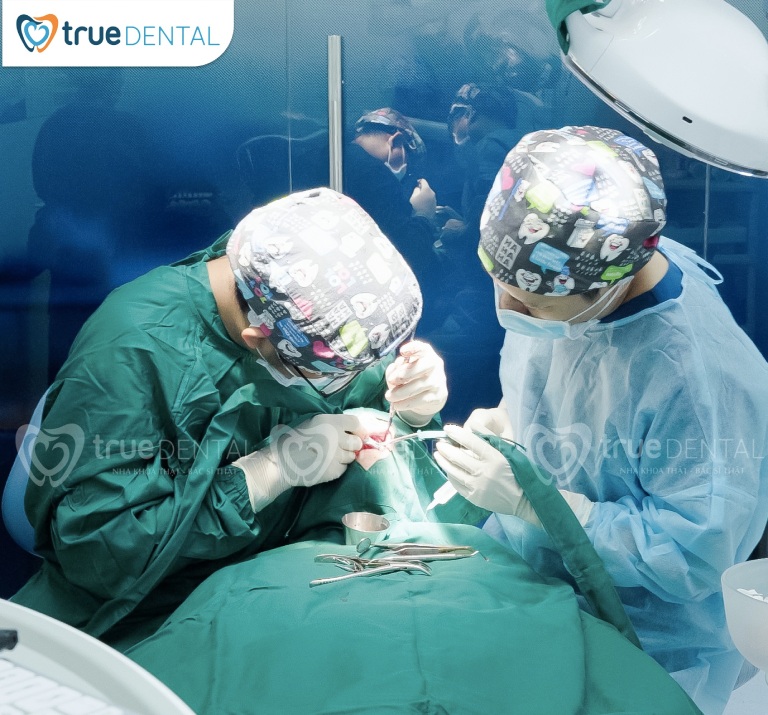
In summary, accurate dental implant impression-taking is a decisive step governing the long-term success and comfort of implant-supported restorations. For safe, high-precision dental implant therapy, contact True Dental today via hotline 090 6636 456 to schedule your complimentary specialist examination and consultation.

Sức Khỏe Răng Miệng
How long does it take to complete the process of getting dental implants?
Tooth replacement affects far more than just smile...
Sức Khỏe Răng Miệng
How much does it cost to replace a molar? Which method is most effective?
First and second molars—commonly referred to in Vietnamese...
Sức Khỏe Răng Miệng
How much does it cost to replace a single tooth? 2026 Price List
Tooth replacement is an effective restorative solution for...
Sức Khỏe Răng Miệng
Which country are Nobel dental implants from? How much do they cost?
Nobel Biocare dental implants stand out for rapid...
Sức Khỏe Răng Miệng
Straumann Dental Implants: Features, Origin, and Cost
Straumann dental implants are widely chosen by patients...
Sức Khỏe Răng Miệng
What are dental implants? When are dental implants needed?
Tooth loss affects far more than just smile...
Tôi đang tìm 1 Nha Khoa để điều trị cho tôi, nhưng rất lo lắng và sợ gặp phải NHA TẶC hoặc bị chèo kéo.
HÃY GIÚP TÔI TƯ VẤN THẬT
254 Điện Biên Phủ, Xuân Hòa, TP.HCM
HƯỚNG DẪN ĐƯỜNG ĐI