


 Tiếng Việt
 Русский
Anterior dental implant placement requires meticulous surgical precision and advanced clinical expertise to ensure patient safety while effectively restoring both facial aesthetics and incising function. In this article, True Dental guides you through the detailed clinical workflow and essential considerations for anterior (front tooth) dental implant placement.
Why Is Anterior Dental Implant Placement Necessary?
Anterior teeth (incisors) are located at the front of the dental arch and are primarily responsible for biting and incising food. They are the first teeth to engage food during mastication and play a pivotal role in defining smile aesthetics and facial harmony. In adults, there are 8 incisors in total: 4 maxillary (upper) incisors and 4 mandibular (lower) incisors.
Losing one or more maxillary or mandibular incisors causes significant daily challenges, particularly affecting self-confidence during speech and smiling. In such scenarios, anterior dental implant therapy represents the gold-standard restorative solution.
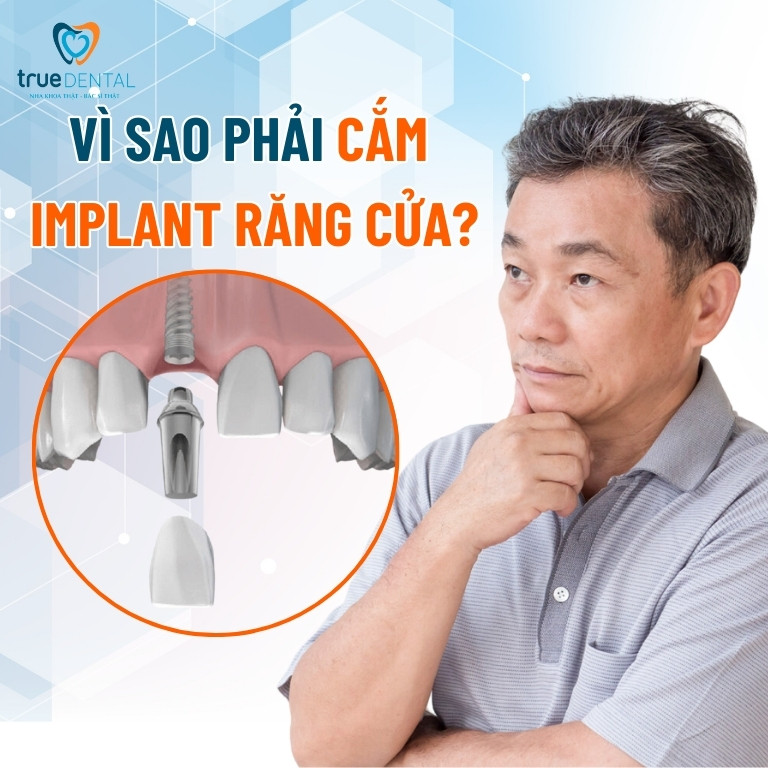
Key Clinical Reasons to Choose Anterior Dental Implant Therapy:
- Superior Aesthetic Restoration: Because incisors occupy the central aesthetic zone, tooth loss is immediately noticeable and severely impacts facial appearance. Dental implant restoration replaces the missing tooth with a bespoke porcelain crown engineered to match the natural shade, translucency, and emergence profile of adjacent teeth.
- Restoration of Incising Function: Missing anterior teeth compromises the ability to bite and tear food. Anterior implants restore natural incising efficiency, providing comfortable, secure function equivalent to natural dentition.
- Prevention of Alveolar Bone Resorption: Following tooth loss, the lack of physiological occlusal stimulation causes progressive alveolar ridge resorption. Endosseous implants transmit masticatory forces into the bone, preserving bone volume and preventing sunken facial contours.
- Preservation of Adjacent Natural Teeth: Unlike conventional fixed dental bridges—which require irreversible enamel reduction of healthy neighboring teeth to serve as abutments—dental implants are anchored directly into the jawbone, keeping adjacent natural teeth completely intact.
- Exceptional Longevity: Compared to fixed bridges or removable partial dentures, dental implants offer superior durability, lasting 20 to 30 years—and frequently a lifetime—with proper oral hygiene and maintenance.
READ MORE: ANTERIOR DENTAL IMPLANT PLACEMENT: ESSENTIAL PRE-OPERATIVE INSIGHTS YOU NEED TO KNOW
How Does the Anterior Dental Implant Workflow Proceed?
Anterior dental implant surgery demands extreme dimensional precision, as the anterior maxilla and mandible are critical to both facial aesthetics and phonetics. Thorough pre-operative diagnostics combined with modern AI computer-guided surgical templates for dental implant placement minimize surgical risks and ensure predictable, long-term aesthetic outcomes.
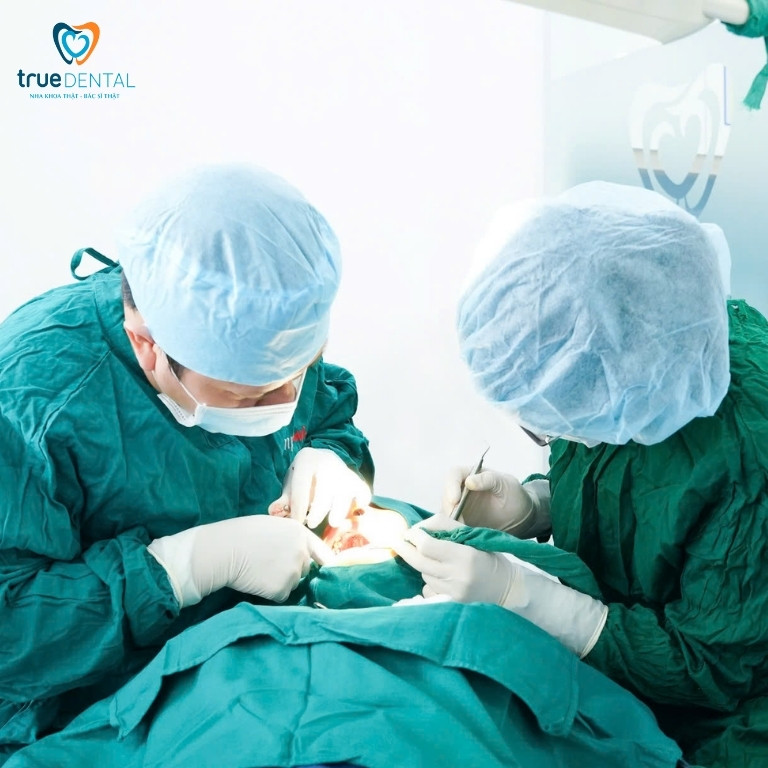
A medically standardized anterior dental implant workflow progresses through the following clinical stages:
- Stage 1: Comprehensive Systemic Health Screening
Initially, patients undergo diagnostic blood testing. This critical step enables clinicians to evaluate systemic health parameters and detect underlying conditions (such as cardiovascular disease or diabetes mellitus).
If systemic issues are identified, the clinician tailors the medical protocol to guarantee surgical safety. Additionally, patients with unmanaged blood-borne infectious diseases—such as active Hepatitis B or HIV/AIDS—are contraindicated for elective implant surgery until medically cleared.
- Stage 2: Clinical & Radiological Diagnostic Evaluation
Panoramic radiography and Cone Beam CT (CBCT) imaging are indispensable in anterior implant planning. Three-dimensional CBCT scans allow specialists to evaluate buccal plate thickness, bone density, and root proximity to establish exact 3D osteotomy coordinates. Furthermore, CBCT detects horizontal or vertical bone deficiencies, enabling the clinician to plan concurrent bone augmentation or soft tissue grafting when required.
- Stage 3: Digital Intraoral Scanning & Impression Acquisition
This phase applies to high-tech guided implant workflows utilizing surgical templates for flapless placement without traditional mucoperiosteal flap elevation. Digital intraoral scanning captures high-precision 3D data of the patient’s dental arch and gingival contours to fabricate an AI surgical guide. This guide dictates the exact spatial trajectory of the fixture, eliminating manual placement deviations.
- Stage 4: AI Surgical Guide Fabrication
The custom AI surgical guide is fabricated in a specialized digital laboratory based on the patient’s CBCT and intraoral scan data. The guide comprises three precision components: the base template, metallic drill sleeves, and stabilization pins, ensuring exact 3D fixture positioning. This technology enables a minimally invasive, flapless surgical approach that significantly reduces post-operative pain and swelling. This stage is exclusive to GST Biological Dental Implant technology.
- Stage 5: Surgical Guide Seating Verification & Implant Placement
Prior to surgery, the clinician verifies the passive fit and seating stability of the surgical guide on the patient’s arch, ensuring zero micro-gaps. Once confirmed, the specialist prepares the osteotomy and inserts the implant fixture under local anesthesia, ensuring a painless surgical experience.
Conversely, when opting for conventional freehand implant placement without digital surgical guides, cleared patients can proceed directly to surgery without digital template fabrication. However, traditional freehand placement requires surgical flap elevation, resulting in greater soft tissue trauma and longer healing timelines.
- Stage 6: Osseointegration Healing Period
Once the implant fixture is placed into the jawbone, the clinician delivers a custom provisional restoration (when indicated) to maintain anterior aesthetics while osseointegration occurs. This healing period spans 3 to 6 months, during which patients must strictly follow post-operative hygiene protocols to accelerate bone integration and prevent peri-implant infection.
- Stage 7: Definitive Porcelain Crown Restoration
Upon radiographic and clinical confirmation of complete osseointegration, the clinician attaches the definitive abutment and cements or screws the final porcelain crown onto the fixture. Custom-crafted to match adjacent teeth in shade, translucency, and surface texture, the definitive crown restores full incising function and natural smile aesthetics.
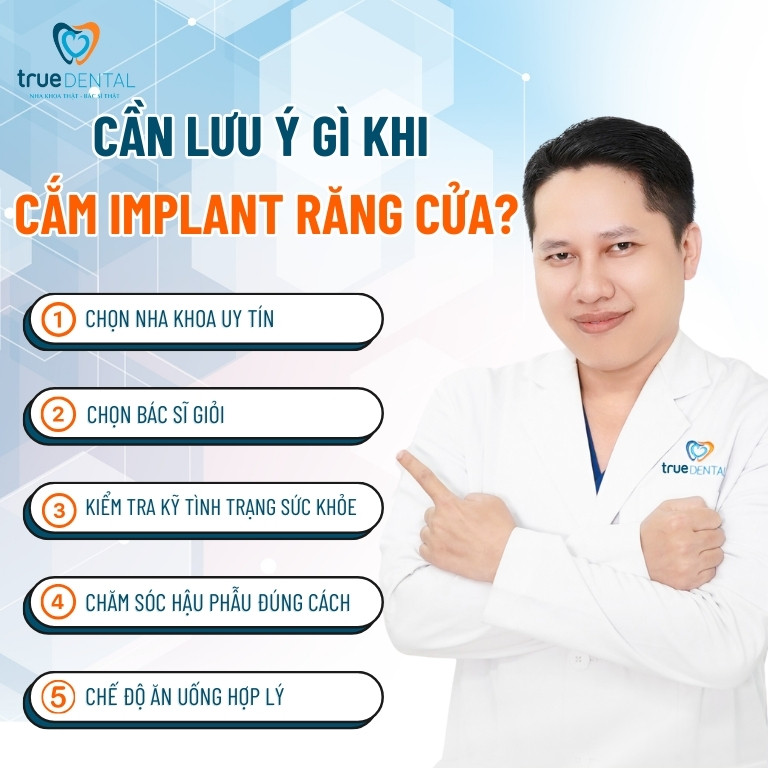
Essential Precautions for Anterior Dental Implant Surgery
While anterior dental implants deliver long-lasting functional and aesthetic results, patients should observe the following clinical guidelines to ensure optimal outcomes:
- Select an Accredited Clinic and Experienced Specialist: This is the single most decisive factor governing surgical and aesthetic success. A skilled implant specialist ensures safe, accurate anterior fixture placement. Patients are encouraged to verify their clinician’s medical degrees, postgraduate implant certifications, and practicing licenses.
- Complete All Pre-Operative Diagnostic Screenings: Pre-surgical blood panels and CBCT imaging are vital for surgical safety. Evaluating bone thickness, gingival biotype, and systemic health enables the clinician to formulate an individualized, risk-free treatment plan.
- Adhere Strictly to Post-Operative Care Protocols: Following surgery, patients must follow prescribed oral hygiene instructions, avoid extremely hard, hot, or cold foods during initial healing, and attend all scheduled follow-up appointments.
- Maintain an Appropriate Post-Surgical Diet: During recovery, consume soft, nutrient-rich foods—such as porridge, soups, and pureed fruits—to prevent mechanical overload on the surgical site. Completely abstain from tobacco smoking and alcohol, as nicotine and alcohol impair tissue perfusion and substantially increase the risk of implant fixture failure.
True Dental – Leading High-Tech Anterior Implant Center in Ho Chi Minh City
When seeking anterior tooth replacement, patients across Ho Chi Minh City trust True Dental as a premier, accredited implant center. Backed by a team of specialists with over 12 years of clinical experience in implantology, True Dental has successfully rehabilitated more than 3,000 patients, restoring confident smiles and full masticatory function.
True Dental pioneers advanced digital implantology, notably GST (Guided Surgery Technology) Biological Dental Implant placement. This innovation optimizes anterior implant surgery by utilizing AI computer-guided surgical templates to place fixtures with absolute 3D accuracy via a flapless approach, eliminating surgical errors and minimizing soft tissue trauma.
True Dental’s advanced implant protocols minimize intraoperative discomfort, post-operative edema, and surgical invasiveness while accelerating tissue recovery. During surgery, True Dental also integrates real-time vital sign monitoring and Platelet-Rich Fibrin/Plasma (PRF/PRP) therapy to maximize surgical safety, expedite soft tissue healing, and shorten osseointegration timelines.
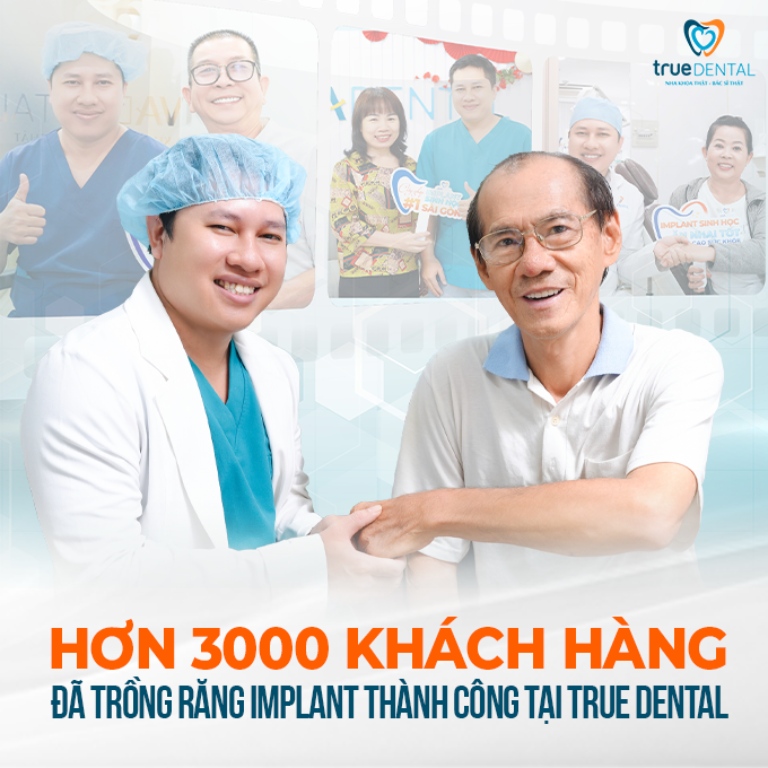
Patients choosing True Dental receive complimentary clinical examinations, panoramic X-rays, Cone Beam CT scans, and medically standardized treatment plans. Furthermore, True Dental offers a comprehensive selection of genuine, certified global implant systems ideally suited for the anterior aesthetic zone, allowing patients to inspect original packaging and serial tags prior to surgery for complete transparency.
Notably, every clinician at True Dental brings over 12 years of dedicated implantology experience, holding formal medical degrees, active practicing licenses, and specialized certifications in single-unit and full-arch implant rehabilitations.
Additionally, every anterior implant procedure at True Dental is backed by a transparent medical treatment contract signed directly by the operating specialist. True Dental guarantees continuity of care with the same dedicated specialist throughout your entire treatment journey, safeguarding all patient rights.
We hope this overview clarifies the clinical workflow and essential precautions for anterior dental implant placement. If you are experiencing anterior tooth loss, contact True Dental today via hotline 090 6636 456 to schedule your complimentary examination and specialist consultation.

Sức Khỏe Răng Miệng
How long does it take to complete the process of getting dental implants?
Tooth replacement affects far more than just smile...
Sức Khỏe Răng Miệng
How much does it cost to replace a molar? Which method is most effective?
First and second molars—commonly referred to in Vietnamese...
Sức Khỏe Răng Miệng
How much does it cost to replace a single tooth? 2026 Price List
Tooth replacement is an effective restorative solution for...
Sức Khỏe Răng Miệng
Which country are Nobel dental implants from? How much do they cost?
Nobel Biocare dental implants stand out for rapid...
Sức Khỏe Răng Miệng
Straumann Dental Implants: Features, Origin, and Cost
Straumann dental implants are widely chosen by patients...
Sức Khỏe Răng Miệng
What are dental implants? When are dental implants needed?
Tooth loss affects far more than just smile...
Tôi đang tìm 1 Nha Khoa để điều trị cho tôi, nhưng rất lo lắng và sợ gặp phải NHA TẶC hoặc bị chèo kéo.
HÃY GIÚP TÔI TƯ VẤN THẬT
254 Điện Biên Phủ, Xuân Hòa, TP.HCM
HƯỚNG DẪN ĐƯỜNG ĐI