


 Tiếng Việt
 Русский
What is dental implant placement? It is an advanced prosthodontic procedure designed to replace missing teeth permanently and effectively. If you are exploring this restorative option, read this clinical guide from True Dental to understand the exact workflow, fee schedule, surgical techniques, and essential pre- and post-operative precautions.
What Is Dental Implant Placement?
Dental implant placement is a modern restorative dental procedure in which a biocompatible titanium fixture is surgically anchored into the jawbone to replace a missing tooth root. Once the endosseous implant integrates with the surrounding bone, a custom porcelain crown is secured onto it—restoring natural smile aesthetics and chewing function indistinguishable from healthy natural teeth.

Compared to conventional alternatives such as fixed porcelain bridges or removable dentures, dental implants deliver superior structural durability and protect long-term oral health. Widely recognized as the ideal tooth replacement modality, implant therapy requires a thorough specialist evaluation to tailor the treatment plan to your specific anatomy.
Structural Components of a Dental Implant
A complete dental implant restoration consists of three precision-engineered components working together to replicate natural tooth anatomy and biomechanics:
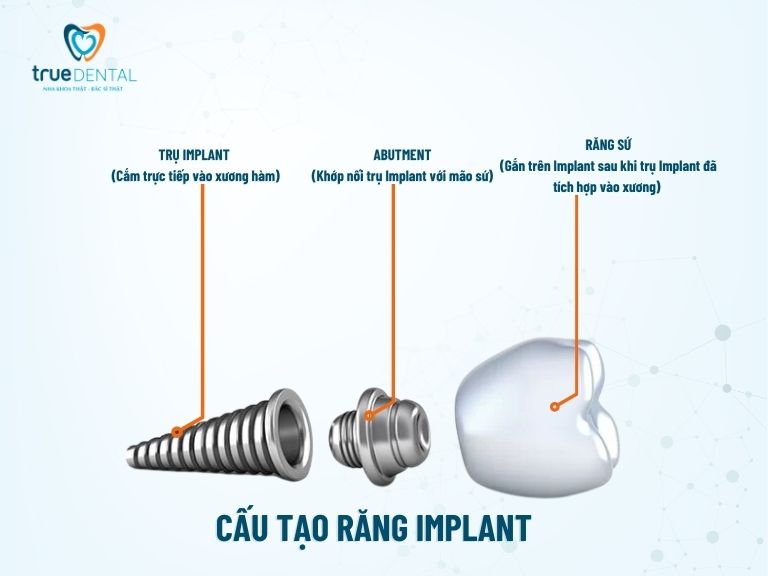
Implant Fixture (Endosseous Post)
The implant fixture serves as the artificial tooth root placed directly into the alveolar jawbone. Precision-milled from medical-grade titanium with high biocompatibility, its threaded macro-design and micro-textured surface promote rapid biological osseointegration with host bone.
Prosthetic Abutment
The abutment is the precision connector linking the subgingival implant fixture to the supragingival porcelain crown. Fabricated from titanium alloy or zirconia, it functions like a prepared tooth core, featuring an internal connection anchored tightly into the fixture and an upper emergence profile tailored to support the crown and soft tissue.
Implant-Supported Porcelain Crown
The porcelain crown forms the visible prosthetic tooth body, custom-crafted from high-strength ceramic to match the shade, translucency, and contour of adjacent natural teeth. Cemented or screw-retained onto the abutment, it resists occlusal wear and staining while restoring full chewing efficiency.
3 Main Dental Implant Treatment Modalities
Depending on the number and distribution of missing teeth, your specialist will recommend one of three primary implant protocols:
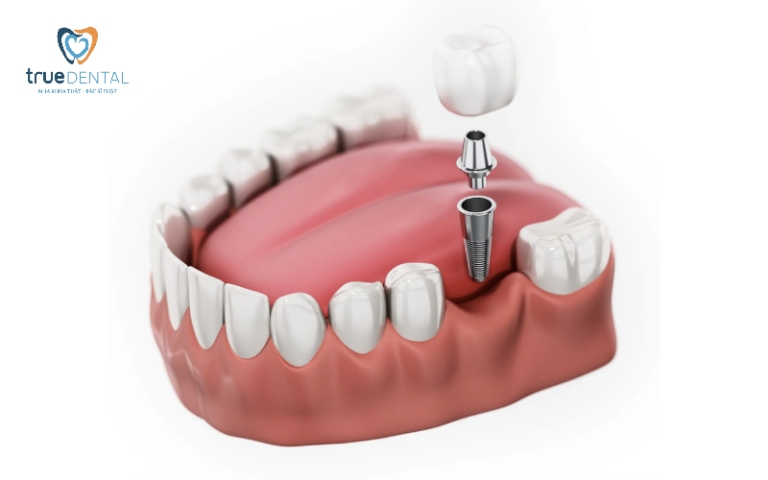
Single-Tooth Dental Implant Placement
Indicated when one tooth or multiple non-adjacent teeth are missing. Each edentulous site receives an independent implant fixture and individual porcelain crown—restoring full function and aesthetics without altering neighboring teeth.
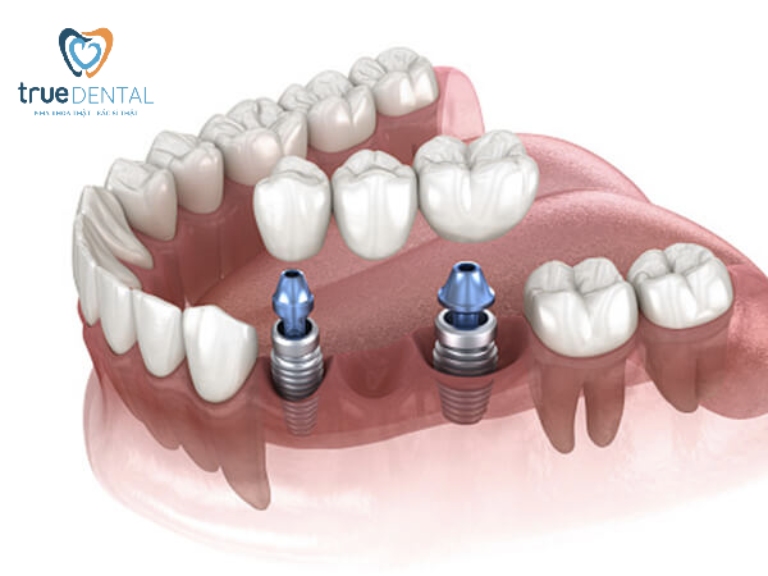
Implant-Supported Fixed Porcelain Bridge
When multiple consecutive teeth are missing, the clinician can place two terminal implant fixtures at either end of the span and restore them with a splinted porcelain bridge—optimizing treatment cost and surgical efficiency while maintaining strong occlusal support.
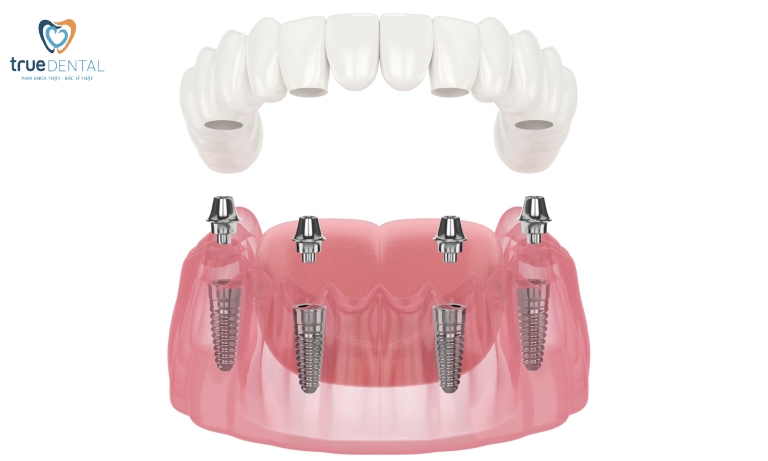
Full-Arch Dental Implant Rehabilitation (All-on-4 / All-on-6)
For complete edentulism in one or both arches, the All-on-4 or All-on-6 protocol utilizes 4 or 6 strategically positioned implants to support a fixed full-arch porcelain bridge. Because full-arch implant surgery is an advanced procedure, it must be performed in licensed medical facilities equipped with hospital-grade sterilization, 3D CBCT diagnostics, and credentialed surgical specialists.
6-Step Medical-Grade Dental Implant Workflow
At True Dental, every dental implant restoration follows a standardized six-stage clinical protocol to maximize surgical safety and long-term predictability:
Step 1: Comprehensive Examination & 3D Diagnostic Consultation
The specialist conducts a thorough intraoral exam, digital radiography, and 3D Cone Beam CT (CBCT) scan to evaluate alveolar bone volume, density, and anatomical landmarks, discussing tailored options with the patient.
Step 2: Personalized Digital Treatment Planning
Based on 3D diagnostic findings, the clinician maps out fixture selection, exact 3D coordinates, implant count, and projected healing timelines, reviewing every detail transparently with the patient.
Step 3: Aseptic Implant Fixture Placement
In a sterile surgical suite under local anesthesia, the implant fixture is placed using one of two clinical techniques:
Conventional Flap Implant Surgery
A conservative incision is made in the gingival mucosa to expose the underlying alveolar ridge, allowing direct visualization as calibrated drills prepare the osteotomy site for fixture insertion.
GST Bio-Guided Flapless Implant Surgery
Utilizing GST (Guided Surgery Technology) and AI-engineered 3D surgical guides, True Dental specialists pinpoint exact implant coordinates without raising a gum flap—minimizing tissue trauma, bleeding, and post-operative discomfort.
Step 4: Biological Osseointegration Healing Phase
Following placement, the implant integrates biologically with surrounding jawbone over 3 to 6 months (or faster with hydrophilic surfaces), supported by routine follow-up checks and post-operative care.
Step 5: Abutment & Definitive Porcelain Crown Delivery
Once full osseointegration is confirmed, the prosthetic abutment is secured onto the fixture and topped with a custom-crafted porcelain crown matching natural tooth shade and occlusion.
Step 6: Home Hygiene Guidance & Routine Maintenance
The clinician provides tailored home hygiene instructions and schedules regular 3- to 6-month recall visits to safeguard peri-implant health for decades.
Key Advantages of Dental Implant Placement
Modern dental implants outperform conventional bridges and removable dentures across three primary clinical dimensions:
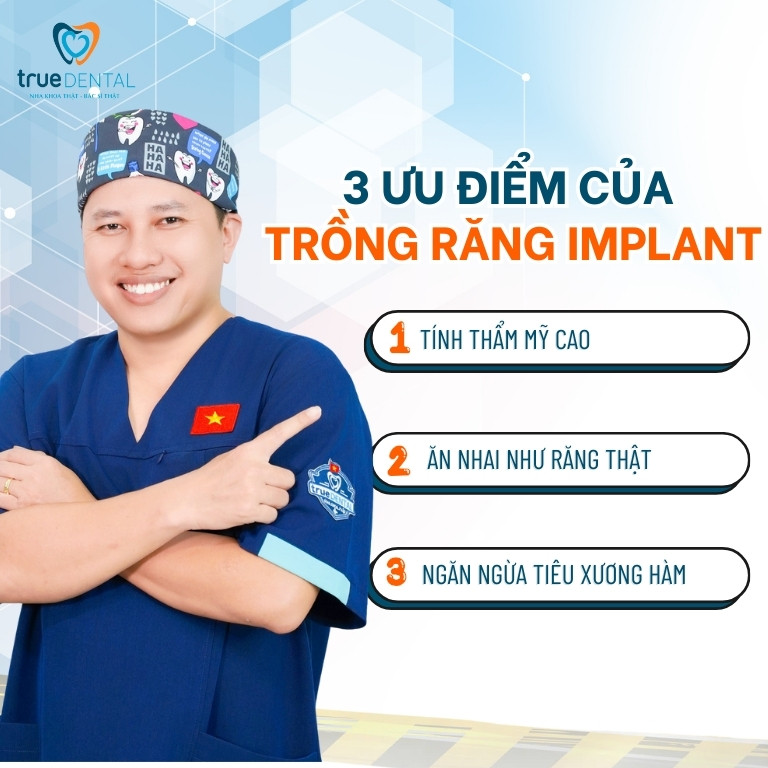
Natural Smile Aesthetics
Custom porcelain crowns replicate the natural shade, translucency, and emergence profile of real teeth, blending seamlessly into your smile.
Natural Chewing Strength & Comfort
Rigidly anchored in alveolar bone, implants withstand heavy daily biting forces—allowing patients to enjoy firm and varied foods comfortably without slippage or soreness.
Prevents Alveolar Bone Resorption
By transmitting functional occlusal forces directly to the jawbone, implants stimulate ongoing bone remodeling—preventing ridge atrophy, sunken cheeks, and premature facial aging.
Should You Get Dental Implants?
According to True Dental specialists, the answer is definitively yes whenever clinically indicated. Beyond restoring stable chewing efficiency and natural aesthetics, dental implants offer multi-decade longevity that minimizes future replacement costs. Proper patient selection ensures optimal outcomes:
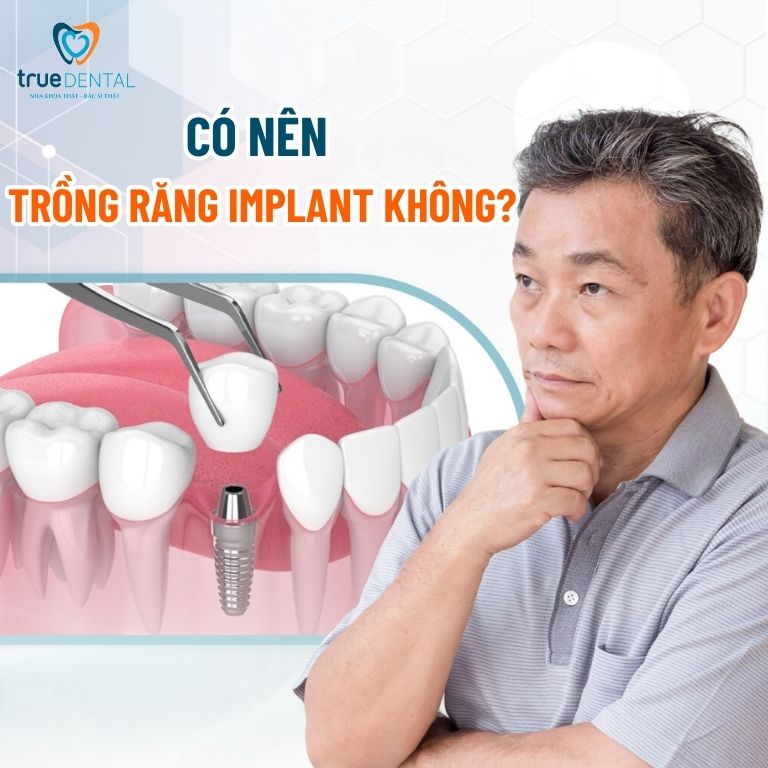
Ideal Candidates for Dental Implants
- Single-Tooth Loss: Restores the missing root and crown independently while preserving adjacent teeth and alveolar bone.
- Multiple Consecutive Missing Teeth: Can be restored efficiently with implant-supported porcelain bridges using fewer fixtures than missing teeth.
- Complete Full-Arch Edentulism: All-on-4 or All-on-6 protocols anchor a fixed full-arch bridge on 4 to 6 implants for natural comfort and stability.
- Hopeless Teeth Requiring Extraction: Severely decayed, periodontally compromised, or fractured teeth can be replaced promptly post-extraction to preserve ridge volume.
- Long-Standing Tooth Loss: Halts ongoing alveolar bone loss and restores lower facial support.
Contraindications & Cases Requiring Preliminary Care
- Adolescents Under 18 Years of Age: Incomplete jawbone growth contraindicates implant placement until skeletal maturation is complete.
- Uncontrolled Chronic Systemic Conditions: Uncontrolled diabetes, severe cardiovascular disease, or hypertension must be medically stabilized prior to surgery.
- Pregnant Women: Elective implant surgery is deferred until after delivery to avoid diagnostic radiation and surgical medications.
- Heavy Smokers: Nicotine impairs wound healing and increases early implant failure risk; smoking cessation is strongly advised before and after surgery.
- Insufficient Alveolar Bone Volume: Severe ridge resorption requires preparatory bone grafting or sinus floor elevation prior to fixture placement.
- Inadequate Mesiodistal Space: Narrow interdental gaps may require minor orthodontic space opening before implant placement.
Essential Precautions Before Getting Dental Implants
Thorough medical, psychological, and financial preparation ensures a smooth procedure and predictable long-term success:
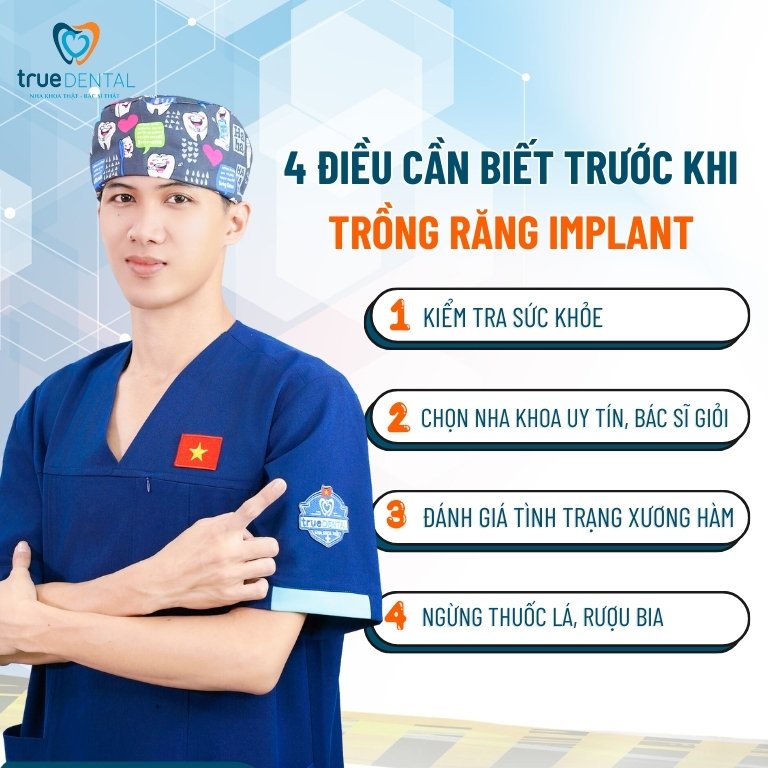
Comprehensive Oral & Systemic Health Evaluation
Undergo thorough clinical screening prior to surgery to ensure optimal candidacy:
- Oral & Periodontal Check: Assess bone density and resolve any active gingivitis, periodontitis, or dental caries beforehand.
- Systemic Medical Screening: Stabilize underlying conditions such as diabetes, heart disease, or hypertension in coordination with your physician.
Choose an Accredited Clinic & Experienced Implantologist
Select a licensed dental center equipped with 3D CBCT imaging, hospital-grade sterilization suites, and credentialed specialists with extensive clinical implantology experience.
Evaluate Alveolar Bone & Sinus Anatomy
If long-term tooth loss has reduced bone height or lowered the maxillary sinus floor, preparatory bone grafting or sinus augmentation establishes a solid foundation for the implant.
Discontinue Smoking and Alcohol
Abstain from tobacco and alcohol for at least 2 weeks before and after surgery to promote rapid soft-tissue healing and predictable osseointegration.
How Much Do Dental Implants Cost?
Total implant fees vary according to the number of missing teeth, selected fixture system, and whether preparatory bone grafting is needed. Below is True Dental’s reference fee schedule per implant fixture:
| Implant Fixture System | Fee (VND / Fixture) |
| Straumann Active | 36,000,000 – 42,000,000 |
| Nobel Active | 36,000,000 – 42,000,000 |
| Implant Swiss | 24,500,000 – 32,000,000 |
| Hiossen | 22,000,000 – 24,800,000 |
| Osstem | 15,800,000 – 18,000,000 |
| Biotem | 9,900,000 – 19,800,000 |
Why Choose True Dental for Dental Implant Placement?
True Dental is recognized as a premier, trusted destination for safe, precision dental implant therapy in Ho Chi Minh City for five key reasons:
- Advanced GST Bio-Guided Implant Technology
True Dental pioneers GST (Guided Surgery Technology) paired with AI-engineered surgical guides—pinpointing exact 3D implant placement without gingival incisions, minimizing trauma, accelerating healing, and safeguarding nerves and sinuses.
- Highly Credentialed Implant Specialists
Graduating from the University of Medicine and Pharmacy at Ho Chi Minh City with extensive clinical experience, our specialists adhere strictly to our core medical ethos: “Everything must begin with accurate diagnosis and ethical care, never maximizing fees.”
- State-of-the-Art Digital & Sterile Infrastructure
Equipped with 3D Cone Beam CT scanners, intraoral 3D scanners, and dedicated operating suites compliant with Ministry of Health sterilization standards to prevent cross-infection.
- 100% Authentic, Factory-Sealed Implant Fixtures
We exclusively utilize globally certified fixtures from Osstem (South Korea), Straumann (Switzerland), and Nobel Biocare (USA)—allowing patients to inspect intact factory seals and serial labels prior to surgery.
- Transparent Written Treatment Contracts
Every patient receives a clear, itemized written agreement detailing fees, treatment stages, and fixture specifications to guarantee complete peace of mind.
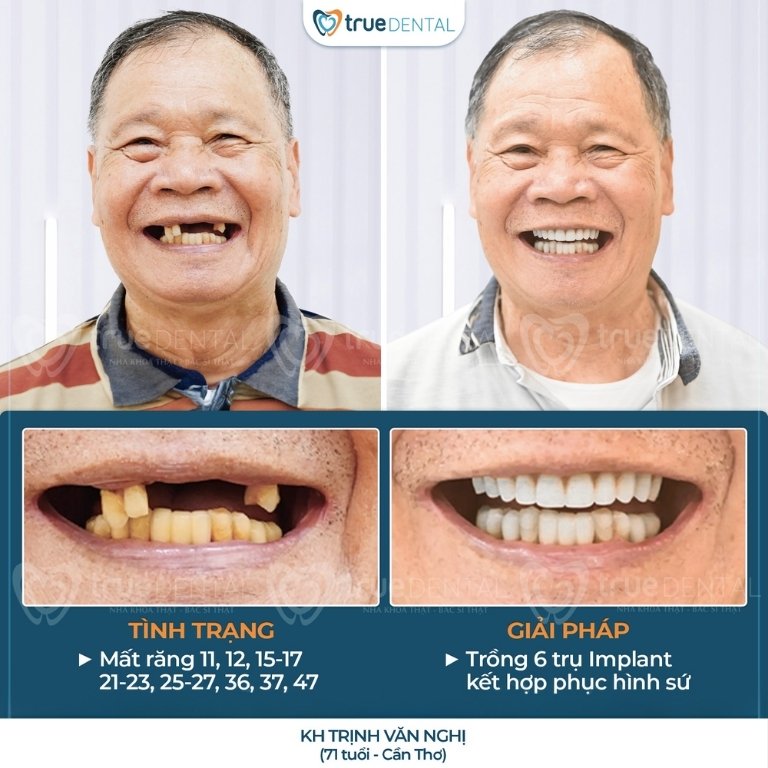
With these clinical advantages, True Dental stands out as a premier choice for safe, predictable dental implant care in Ho Chi Minh City.
In this guide, True Dental specialists have answered “What is dental implant placement?” alongside essential clinical details on workflow, candidacy, and pricing. If you are considering dental implants or would like a personalized consultation, contact True Dental today via Hotline 090 6636 456!

[Q&A] CAN YOU GET BRACES AFTER HAVING DENTAL IMPLANTS?
Many patients who have already restored missing teeth...
Sức Khỏe Răng Miệng
What is dental implant treatment? Key information and costs
What is dental implant placement? It is an...
Sức Khỏe Răng Miệng
IS DENTAL IMPLANT SURGERY PAINFUL? IMPORTANT THINGS TO KNOW
Dental implant placement is a widely chosen restorative...
Sức Khỏe Răng Miệng
All-on-6 Dental Implants: Procedure, Costs, and Important Considerations
All-on-6 dental implant placement is a comprehensive restorative...
Sức Khỏe Răng Miệng
DENTAL IMPLANTS – THE PERFECT SOLUTION FOR REPLACING MISSING TEETH
Today, dental implant placement has become increasingly popular...
Sức Khỏe Răng Miệng
How long does it take to complete the process of getting dental implants?
Tooth replacement affects far more than just smile...
Tôi đang tìm 1 Nha Khoa để điều trị cho tôi, nhưng rất lo lắng và sợ gặp phải NHA TẶC hoặc bị chèo kéo.
HÃY GIÚP TÔI TƯ VẤN THẬT
254 Điện Biên Phủ, Xuân Hòa, TP.HCM
HƯỚNG DẪN ĐƯỜNG ĐI