


 Tiếng Việt
 Русский
Today, dental implant placement has become increasingly popular and is widely chosen by patients for tooth replacement due to its superior aesthetic results and ability to restore natural masticatory function. So, what is a dental implant? When is implant therapy indicated or contraindicated? What precautions should you keep in mind before and after surgery? Let’s explore these clinical essentials with True Dental in the comprehensive guide below.
1. What Is Dental Implant Placement?
Dental implant placement is an advanced prosthodontic procedure designed to replace one or more missing teeth by surgically anchoring a biocompatible titanium fixture into the jawbone at an edentulous site. This endosseous fixture functions as an artificial tooth root, providing a stable foundation to support single porcelain crowns, fixed dental bridges, or full-arch implant-retained prostheses that replicate natural teeth in both appearance and function.

Widely recognized as the gold standard for replacing missing teeth, modern dental implantology achieves clinical success rates of up to 98% thanks to advances in digital diagnostics and biomaterial engineering. It is particularly beneficial for patients with long-standing tooth loss and progressive alveolar bone resorption.
2. Clinical Indications for Dental Implants
Single-tooth gaps, multiple missing teeth, and even complete full-arch edentulism resulting from trauma, periodontal disease, decay, or congenital hypodontia can all be effectively restored with dental implants.
2.1. Single or Non-Adjacent Missing Teeth
For patients missing one tooth or several non-adjacent teeth, single-tooth dental implant placement restores each edentulous site independently. The specialist places one titanium fixture per missing tooth and secures an individual porcelain crown on top—eliminating the need to grind down healthy adjacent teeth for a conventional bridge.

2.2. Two Consecutive Missing Teeth
When two adjacent teeth are missing, two independent implant fixtures are placed and restored with two separate porcelain crowns to ensure optimal load distribution and long-term occlusal stability.
2.3. Three or More Consecutive Missing Teeth
When three or more consecutive teeth are missing, the clinician can place fewer implants than the total number of missing teeth and connect them with an implant-supported porcelain bridge—optimizing treatment cost while maintaining strong chewing support (for example, placing two implants at either end to support a 3-unit bridge).

2.4. Complete Full-Arch Edentulism
For patients missing all teeth in one or both arches, specialists utilize full-arch protocols such as All-on-4 or All-on-6—anchoring 4 or 6 strategically angled implants into the jawbone to support a fixed 12- to 14-tooth prosthetic bridge per arch.
This approach maximizes available native bone while minimizing the need for extensive bone grafting.
By reducing the required number of fixtures per arch, All-on-4 and All-on-6 deliver robust chewing strength, natural smile aesthetics, and superior cost-efficiency.
Whether All-on-4 or All-on-6 is ideal depends on your alveolar bone volume and density, which your specialist will evaluate via 3D CBCT imaging.

3. Advantages and Disadvantages of Dental Implants
3.1. Clinical Advantages
Dental implant placement offers a safe, biologically sound restorative solution with six standout benefits:
- Biocompatible & Safe: Engineered from medical-grade titanium with high tissue biocompatibility, authentic certified implants integrate harmoniously with host bone without eliciting adverse reactions.
- Superior Strength & Chewing Stability: Implants far outperform removable dentures and conventional bridges in occlusal stability, restoring natural biting force without slippage, loosening, or fracture.
- Lifelike Smile Aesthetics: Custom-crafted ceramic crowns match natural tooth shade, translucency, and contour, restoring confidence in daily speaking and smiling.
- Prevents Alveolar Bone Resorption & Gingival Recession: Functional occlusal load transfer stimulates surrounding jawbone, halting progressive ridge atrophy and soft-tissue collapse.
- Preserves Healthy Adjacent Teeth: Unlike conventional bridges, implant placement is completely self-supporting and requires zero preparation or alteration of neighboring teeth.
- Exceptional Longevity: With proper daily oral hygiene and routine professional maintenance, dental implants routinely last 20 to 30+ years—and frequently a lifetime.

3.2. Limitations to Consider
- Not Indicated Under Age 18: Adolescents whose craniofacial and alveolar bone growth is incomplete should defer implant placement, as implants remain ankylosed in bone and would not erupt alongside growing natural teeth.
- Higher Initial Investment: Upfront treatment fees exceed those of fixed porcelain bridges or removable dentures, typically ranging from 15,000,000 to 36,000,000+ VND per fixture depending on system and crown type.
- Extended Treatment Timeline: Complete biological osseointegration can take up to 3 to 6 months, requiring more clinical precision and patience than conventional prosthetics.
- Requires Medical & Anatomical Candidacy: Not every patient is an immediate candidate; some require preparatory sinus floor elevation or bone grafting, and surgery is contraindicated in children, pregnant patients, or individuals with uncontrolled systemic conditions.
4. Who Is Not a Candidate for Dental Implants?
Despite their clinical superiority, dental implants require thorough medical and anatomical screening prior to surgery. Implant placement is contraindicated or deferred in the following cases:
- Patients Under 18 Years of Age: Incomplete skeletal and jawbone maturation compromises implant stability and can interfere with ongoing craniofacial development.
- Pregnant Women: Elective implant surgery is deferred during pregnancy to avoid unnecessary exposure to diagnostic radiography, local anesthetics, and post-operative medications.
- Severe Alveolar Bone Deficiency: Insufficient bone height or density prevents primary mechanical stability unless preliminary bone grafting or sinus augmentation is performed first.
- Uncontrolled Chronic Systemic Conditions: Uncontrolled diabetes, severe cardiovascular disease, or bleeding disorders impair wound healing and elevate peri-implant infection risks.
- Heavy Smokers: Nicotine and tobacco toxins constrict microvascular blood flow, delay soft-tissue and bone healing, and significantly increase early implant failure rates.
- Severe Psychiatric or Behavioral Instability: Successful implant therapy requires patient cooperation, informed consent, and adherence to post-operative care protocols.

5. 5-Step Dental Implant Placement Workflow at True Dental
Dental implant therapy at True Dental follows a strict, five-stage clinical protocol compliant with Ministry of Health standards:
- Step 1: Comprehensive Examination & 3D Diagnostic Consultation
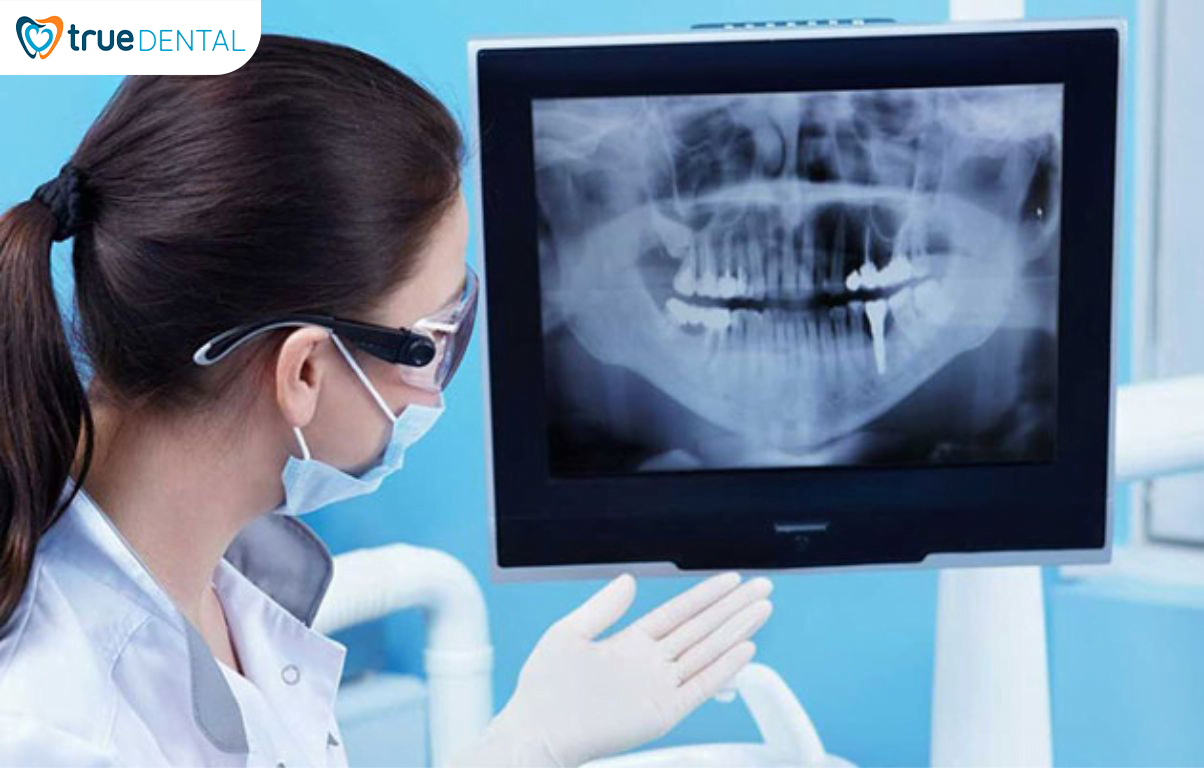
- The specialist performs an intraoral exam, 3D Cone Beam CT (CBCT) imaging, and necessary clinical screenings to evaluate bone volume and formulate an individualized treatment plan.
- Step 2: Aseptic Implant Fixture Placement
- In a sterile operating suite under effective local anesthesia, fixture placement typically takes just 20 to 30 minutes per implant, followed by 2 to 3 months for biological osseointegration. If preparatory extractions, sinus floor elevation, or bone grafting are required, healing spans approximately 6 to 9 months.
- Step 3: Osseointegration Check & Digital/Physical Impression
- The clinician verifies bone-to-implant integration via follow-up radiography and takes precision arch impressions to fabricate the definitive ceramic crown (with provisional teeth provided during healing where indicated).
- Step 4: Definitive Porcelain Crown Delivery
- The custom porcelain crown is secured onto the abutment, and the clinician provides tailored home oral hygiene instructions.
- Step 5: Scheduled Routine Follow-Up Reviews
6. Essential Precautions Before Dental Implant Surgery
6.1. Complete Pre-Operative 3D Radiographic & Clinical Screening
Undergo recommended diagnostic imaging and blood panels prior to surgery to confirm anatomical and systemic suitability for implant placement.
6.2. Disclose Your Full Medical History
Inform your clinician accurately about any chronic illnesses, past surgeries, allergies, or current medications to prevent intraoperative or post-operative complications.
6.3. Maintain Healthy Nutrition and Rest Before Surgery
Get adequate rest and eat a light, nutritious meal prior to surgery (when local anesthesia is used) so your body is in optimal condition for smooth recovery.
6.4. Stay Calm and Mentally Relaxed
Approaching surgery with a calm, confident mindset helps stabilize blood pressure and supports a smooth, comfortable clinical experience.
6.5. Select an Appropriate Certified Implant System
Different implant brands feature distinct surface technologies and osseointegration timelines; consult your specialist to choose the certified system best suited to your bone density and budget.
6.6. Discontinue Smoking and Alcohol
Tobacco and alcohol impair gingival and bone healing and elevate infection risk; abstain completely before and during surgical recovery.
7. Proper Post-Operative Care After Dental Implant Placement
7.1. Daily Oral Hygiene Protocol
Meticulous daily plaque control is critical to preventing peri-implant mucositis, crestal bone loss, or fixture loosening. Follow these essential hygiene practices:
- Brush gently with an extra-soft, tapered-bristle toothbrush to remove interproximal plaque without traumatizing gingival tissue.
- Brush at least twice daily using light, controlled pressure.
- Replace your toothbrush every 3 months.
- Use implant-safe dental floss, interdental brushes, or an oral irrigator alongside an alcohol-free antimicrobial rinse.
- Avoid wooden toothpicks, which can splinter and injure peri-implant mucosa.
- Schedule professional dental cleanings every 3 to 6 months, and contact your dentist immediately if you notice mobility, numbness, or persistent soreness around the implant.

7.2. Post-Operative Dietary Guidelines
Balanced nutrition supports rapid tissue healing and long-term implant durability:
- Favor soft, finely cut, thoroughly cooked foods during initial healing.
- Avoid biting down on hard objects such as ice, nuts, or hard shells.
- Limit heavily staining or sticky foods.
- Minimize sugary carbonated beverages, coffee, alcohol, and tobacco.
- Incorporate foods rich in calcium, essential minerals, and vitamins to support bone remodeling.
- Strictly abstain from smoking for at least 2 to 4 weeks following implant surgery.
True Dental hopes this clinical guide gives you a clear, comprehensive understanding of dental implant therapy. Be sure to follow True Dental for more evidence-based oral health insights!
With a team of specialists boasting over 10 years of clinical experience, state-of-the-art diagnostic infrastructure, and strict Ministry of Health sterilization protocols, True Dental has helped thousands of patients restore healthy, confident smiles and natural chewing comfort.
True Dental is committed to delivering trusted, safe, and rewarding implant care. Contact us today via Hotline 090.6636.456 for a complimentary specialist consultation!

[Q&A] CAN YOU GET BRACES AFTER HAVING DENTAL IMPLANTS?
Many patients who have already restored missing teeth...
Sức Khỏe Răng Miệng
What is dental implant treatment? Key information and costs
What is dental implant placement? It is an...
Sức Khỏe Răng Miệng
IS DENTAL IMPLANT SURGERY PAINFUL? IMPORTANT THINGS TO KNOW
Dental implant placement is a widely chosen restorative...
Sức Khỏe Răng Miệng
All-on-6 Dental Implants: Procedure, Costs, and Important Considerations
All-on-6 dental implant placement is a comprehensive restorative...
Sức Khỏe Răng Miệng
DENTAL IMPLANTS – THE PERFECT SOLUTION FOR REPLACING MISSING TEETH
Today, dental implant placement has become increasingly popular...
Sức Khỏe Răng Miệng
How long does it take to complete the process of getting dental implants?
Tooth replacement affects far more than just smile...
Tôi đang tìm 1 Nha Khoa để điều trị cho tôi, nhưng rất lo lắng và sợ gặp phải NHA TẶC hoặc bị chèo kéo.
HÃY GIÚP TÔI TƯ VẤN THẬT
254 Điện Biên Phủ, Xuân Hòa, TP.HCM
HƯỚNG DẪN ĐƯỜNG ĐI