

 Tiếng Việt
 Русский
Safe dental implant placement is a top priority for patients restoring missing teeth with endosseous implants. Achieving a predictable, complication-free outcome requires choosing an accredited dental center and an experienced implant specialist. Read the guide below from True Dental to understand what defines safe implant surgery and how to prevent post-operative complications.
What Does Safe Dental Implant Placement Mean?
Dental implant placement replaces missing tooth roots with biocompatible Titanium fixtures that osseointegrate directly with the jawbone—restoring natural masticatory efficiency, aesthetics, and long-term structural stability.

Safe dental implant surgery means executing the procedure at an accredited dental facility staffed by credentialed implantologists, utilizing digital 3D guidance technology, certified biomaterials, and hospital-grade aseptic protocols to minimize surgical risks and ensure lifelong success.
5 Critical Factors Determining Dental Implant Safety
Ensuring safe, predictable implant rehabilitation requires careful evaluation of five clinical and operational pillars:

Patient Systemic Health & Underlying Conditions
Prior to surgery, every patient undergoes a comprehensive medical evaluation. Systemic conditions such as uncontrolled diabetes mellitus, cardiovascular disease, hypertension, or active oral infections can impair angiogenesis and osseointegration. Stabilizing systemic health beforehand is essential for safe surgical healing.
Implant Fixture Quality & Verifiable Origin
The implant fixture serves as the artificial tooth root. Using FDA/CE-certified fixtures from globally established manufacturers with verifiable serial numbers and international warranties significantly elevates osseointegration rates and prevents mechanical failure. Patients should always inspect sealed packaging prior to surgery.
Digital Surgical Technology & Guided Protocols
Modern computer-guided implantology maximizes surgical precision while minimizing soft tissue trauma. At True Dental, GST (Guided Surgery Technology) Biological Implantology with AI surgical templates enables clinicians to control exact 3D osteotomy position, angulation, and depth—protecting vital neurovascular structures and the maxillary sinus.
Paired with piezosurgery and Platelet-Rich Plasma (PRP) growth-factor therapy, digital workflows accelerate tissue regeneration and reduce post-operative discomfort.
Surgeon Credentials & Clinical Experience
Implant surgery must be performed by licensed specialists with advanced postgraduate training in implantology. Atraumatic surgical execution and vigilant post-operative monitoring dramatically reduce complications and boost long-term survival rates. Selecting an accredited center with dedicated implant specialists ensures safe, evidence-based care.
Sterile Operating Suite & Aseptic Standards
Implant surgery requires a dedicated operating suite adhering to strict international sterilization and cross-infection control protocols. Accredited dental facilities utilize Class-B autoclaves, single-use sterile surgical drapes, and UV/HEPA air filtration to eliminate intraoperative bacterial contamination.
The 8-Step Protocol for Safe Dental Implant Placement
To guarantee clinical safety and precision, True Dental follows a standardized 8-step surgical and prosthodontic workflow:

Step 1: Comprehensive Oral & Medical Examination
The specialist reviews your medical history, screens for systemic conditions such as diabetes or hypertension, and evaluates periodontal health and occlusion.
Step 2: 3D CBCT Imaging & Preoperative Lab Tests
High-resolution dental radiographs and 3D Cone Beam CT (CBCT) scans map alveolar bone volume, trabecular density, nerve canals, and sinus anatomy, supported by routine blood coagulation screening.
Step 3: Personalized Digital Treatment Planning
Using 3D diagnostic data, the clinician designs a customized surgical plan—selecting the ideal implant system, dimensions, 3D trajectory, and treatment timeline.
Step 4: Local Anesthesia & Surgical Site Antisepsis
Painless local anesthesia is administered, and the perioral and intraoral surgical fields are thoroughly disinfected under strict aseptic conditions.
Step 5: Precision Implant Fixture Placement
Using computer-guided surgical templates, the specialist prepares the osteotomy with copious sterile saline irrigation and inserts the Titanium fixture at the planned 3D position with optimal primary stability.
Step 6: Provisional Tooth Delivery
When clinically indicated, an aesthetic provisional restoration is placed to maintain smile appearance and phonetics during the 3- to 6-month osseointegration period.
Step 7: Post-Operative Monitoring & Follow-Up Visits
Scheduled clinical and radiographic follow-ups verify soft tissue healing and confirm complete biological osseointegration between bone and fixture.
Step 8: Definitive Porcelain Crown Restoration
Once full osseointegration is achieved, a custom abutment and definitive porcelain crown—matched to your natural tooth shade and anatomy—are secured, restoring full chewing function.
Potential Complications & Preventive Measures in Implant Surgery
Although dental implant therapy enjoys a high success rate, complications can arise if surgical protocols or post-operative care are compromised. Understanding potential risks and preventive measures ensures smooth recovery:
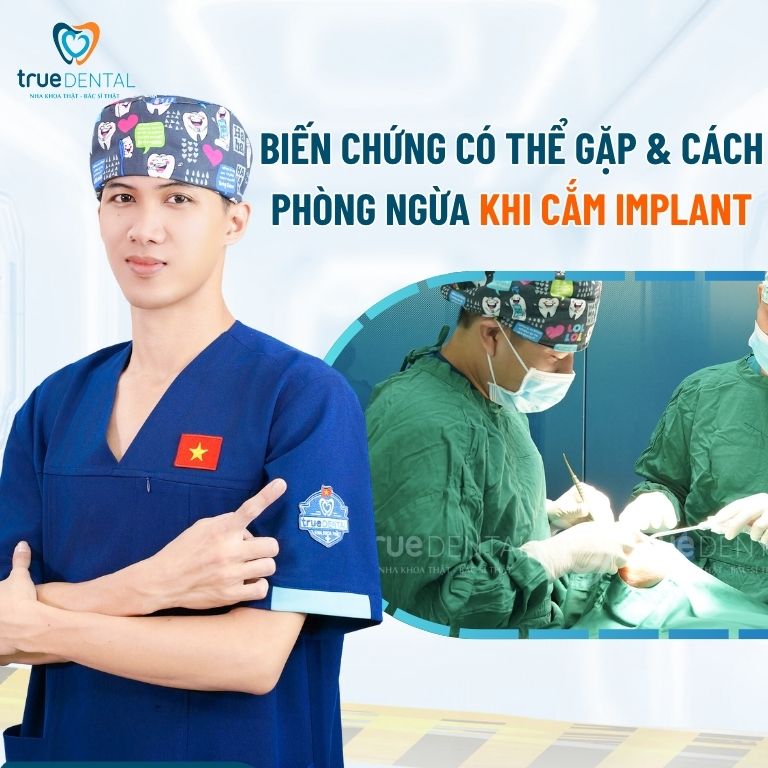
Surgical Site Infection
Inadequate oral hygiene, breaches in intraoperative sterility, or compromised immunity can lead to localized bacterial infection—manifesting as erythema, throbbing pain, swelling, or purulent discharge. Strict asepsis, prescribed antibiotics, and gentle antiseptic rinses effectively prevent infection.
Prolonged Post-Operative Bleeding
Continuous bleeding beyond 24 hours may stem from vascular trauma or underlying coagulation disorders. Preoperative blood screening and atraumatic flapless surgery minimize bleeding risks.
Neurosensory Nerve Injury
Improper osteotomy depth in the posterior mandible can impinge upon the inferior alveolar or mental nerve, causing paresthesia (numbness, tingling, or altered sensation) of the lower lip, chin, or tongue. Preoperative 3D CBCT nerve mapping and AI surgical guides eliminate this risk.
Maxillary Sinusitis
Placing upper posterior implants without accounting for limited subantral bone height can perforate the maxillary sinus floor, causing sinusitis and nasal congestion. Accurate 3D CBCT measurement and sinus floor elevation prevent sinus perforation.
Peri-Implantitis
Peri-implantitis is a plaque-induced inflammatory condition affecting peri-implant mucosa and supporting bone, driven by poor hygiene, smoking, or untreated periodontitis. Routine professional maintenance and diligent daily plaque control keep peri-implant tissues healthy.
Adjacent Tissue or Root Trauma
Inaccurate angulation without 3D guidance can encroach upon neighboring tooth roots or cortical plates. Computer-guided templates ensure safe clearance from adjacent anatomical structures.
Material Hypersensitivity
Rare allergic sensitivity to trace metals in Titanium alloys can cause localized inflammation or rash. Preoperative allergy screening and metal-free Zirconia implant alternatives prevent hypersensitivity reactions.
Implant Fixture Failure (Non-Osseointegration)
Implant failure occurs when bone fails to fuse to the fixture, resulting in mobility and discomfort. Choosing certified implant systems, precise surgical execution, and smoking cessation ensure predictable osseointegration.
Safety Comparison: Dental Implants vs. Bridges vs. Removable Dentures
Comparing the three primary tooth replacement options across clinical safety, tissue preservation, and durability helps you make an informed choice:
| Dental Implant Placement | Fixed Dental Bridge | Removable Denture | |
| Clinical Safety & Biocompatibility | Very High — minimally invasive, preserves intact dentition | Moderate — requires irreversible grinding of adjacent teeth | Low — unstable fit, prone to mucosal irritation and ulcers |
| Prevents Bone Resorption | Yes | No | No |
| Impact on Natural Teeth | Zero impact on neighboring healthy teeth | Requires enamel reduction of 2 adjacent abutment teeth | No grinding, but clasps may stress anchor teeth |
| Longevity | 10–20+ years to lifelong with proper oral care | 7–15 years depending on ceramic material and hygiene | 3–5 years before requiring relining or replacement |
Dental Implant Pricing at True Dental
While dental implants require a higher initial investment than conventional prostheses—typically starting above 10,000,000 VND depending on the system—they offer unmatched lifelong value. Below is the transparent fee schedule at True Dental:
| Implant System | Origin | Prosthetic Crown Type | Price (VND / Tooth) | Fixture Warranty | Crown Warranty |
| STRAUMANN BLX Immediate | Switzerland | All-Ceramic Crown | 48,000,000 | 30 Years | 5 Years |
| NOBEL ACTIVE | USA | All-Ceramic Crown | 42,000,000 | 30 Years | 5 Years |
| STRAUMANN ACTIVE | Switzerland | All-Ceramic Crown | 42,000,000 | 30 Years | 5 Years |
| SWISS | Switzerland | All-Ceramic Crown | 34,000,000 | 25 Years | 5 Years |
| MEGAGEN AR Immediate | South Korea | All-Ceramic Crown | 32,000,000 | 20 Years | 5 Years |
| HIOSSEN | USA | All-Ceramic Crown | 25,800,000 | 20 Years | 5 Years |
| OSSTEM | South Korea | All-Ceramic Crown | 22,800,000 | 15 Years | 5 Years |
| OSSTEM | South Korea | PFM (Titanium) Crown | 21,800,000 | 10 Years | 3 Years |
| BIOTEM | South Korea | All-Ceramic Crown | 20,800,000 | 10 Years | 5 Years |
| BIOTEM | South Korea | PFM (Titanium) Crown | 19,800,000 | 10 Years | 3 Years |
READ MORE:
In summary, safe dental implant placement requires strict adherence to evidence-based clinical protocols—from selecting an accredited dental center and certified fixtures to following post-operative care guidelines. To ensure lasting, complication-free results, contact True Dental today to schedule a complimentary consultation with our specialist implantologists.

Sức Khỏe Răng Miệng
How long does it take to complete the process of getting dental implants?
Tooth replacement affects far more than just smile...
Sức Khỏe Răng Miệng
How much does it cost to replace a molar? Which method is most effective?
First and second molars—commonly referred to in Vietnamese...
Sức Khỏe Răng Miệng
How much does it cost to replace a single tooth? 2026 Price List
Tooth replacement is an effective restorative solution for...
Sức Khỏe Răng Miệng
Which country are Nobel dental implants from? How much do they cost?
Nobel Biocare dental implants stand out for rapid...
Sức Khỏe Răng Miệng
Straumann Dental Implants: Features, Origin, and Cost
Straumann dental implants are widely chosen by patients...
Sức Khỏe Răng Miệng
What are dental implants? When are dental implants needed?
Tooth loss affects far more than just smile...
Tôi đang tìm 1 Nha Khoa để điều trị cho tôi, nhưng rất lo lắng và sợ gặp phải NHA TẶC hoặc bị chèo kéo.
HÃY GIÚP TÔI TƯ VẤN THẬT
254 Điện Biên Phủ, Xuân Hòa, TP.HCM
HƯỚNG DẪN ĐƯỜNG ĐI