


 Tiếng Việt
 Русский
Peri-implantitis following dental implant placement is a serious clinical complication that can pose significant risks to a patient’s oral and systemic health. Therefore, patients should thoroughly understand the underlying causes, clinical warning signs, and targeted treatment protocols for this inflammatory condition to safeguard their restorations and overall well-being.
What Is Peri-Implantitis?
Peri-implantitis is a site-specific infectious pathology affecting both the peri-implant soft mucosa and the supporting alveolar bone surrounding an osseointegrated implant fixture. Left untreated, this condition compromises the structural support of the restoration, causing pain, gingival swelling, and progressive bone loss that significantly increases the risk of implant fixture failure.
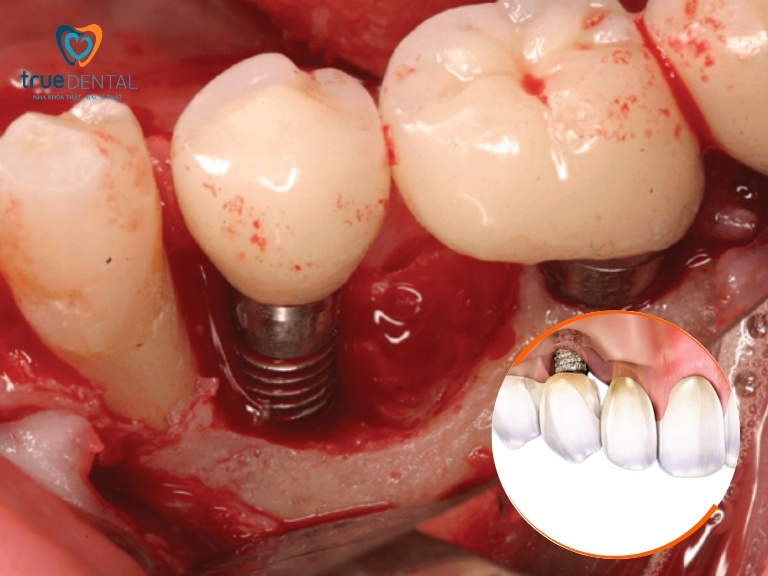
Peri-implant inflammation develops when bacterial biofilm, dental plaque, and food debris accumulate around the implant collar without proper mechanical removal. Pathogenic bacteria colonize the sulcus between the implant platform and the mucosal seal, forming deep peri-implant pockets. As bacterial proliferation advances, endotoxins trigger severe inflammation and progressive resorption of the supporting alveolar bone, ultimately causing fixture mobility or explantation.
The incidence of peri-implantitis is clinically significant and can manifest even years after an initially successful dental implant surgery. Early clinical detection and prompt intervention are essential to preserving peri-implant tissue health and extending restoration longevity.
READ MORE: IS FACIAL SWELLING AFTER DENTAL IMPLANT SURGERY NORMAL? HOW MANY DAYS DOES IT TAKE TO SUBSIDE?
Root Causes of Peri-Implantitis
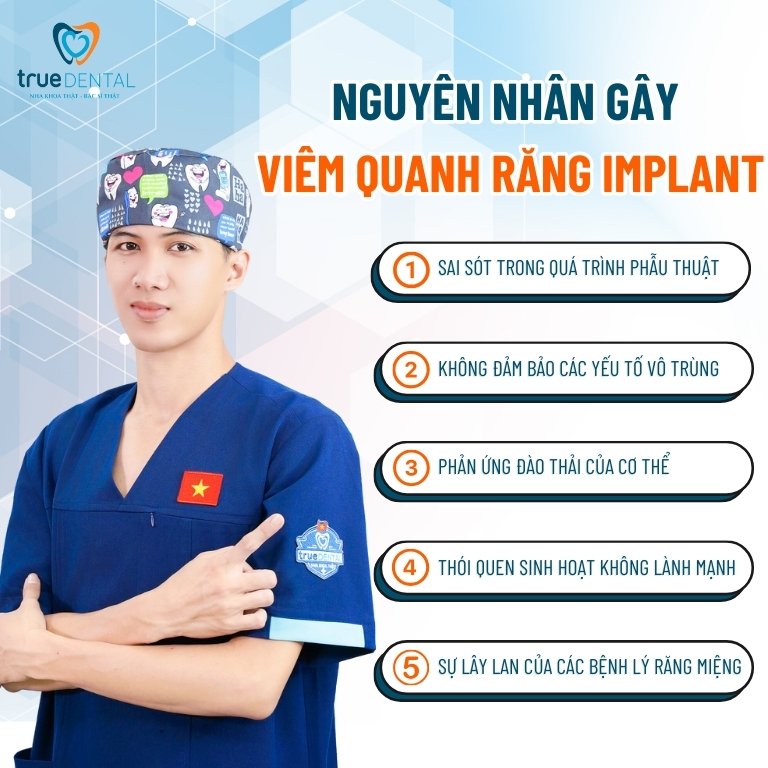
Peri-implantitis can develop both during the early post-surgical healing phase and years after definitive prosthetic loading. Key etiological factors include:
- Surgical Placement or Prosthetic Errors: Improper 3D osteotomy trajectory, inadequate buccal plate thickness, or residual subgingival cement during crown delivery creates niches for bacterial retention and excessive biomechanical stress on the implant fixture, triggering localized bone loss and inflammation.
- Compromised Aseptic Surgical Protocols: The operating suite and surgical instrumentation must adhere strictly to Ministry of Health sterilization standards. Undergoing surgery at unaccredited clinics with inadequate infection control dramatically elevates the risk of intraoperative bacterial contamination.
- Adverse Tissue Reaction or Sub-Standard Materials: While rare, certain patients exhibit hypersensitivity or poor soft tissue response to sub-standard alloys or improperly treated surfaces rather than certified medical-grade Titanium, leading to chronic mucosal irritation and fixture rejection.
- Detrimental Lifestyle Habits: Tobacco smoking, excessive alcohol consumption, and nutritional deficiencies impair microvascular perfusion and host immune response, accelerating bacterial colonization around the fixture. Because nicotine and alcohol are primary drivers of implant failure, patients are strictly advised to abstain both pre- and post-operatively.
- Inadequate Daily Oral Hygiene: Neglecting thorough brushing morning and night—as well as interdental cleaning after meals—allows dental plaque and calculus to accumulate around the implant collar. Bacterial biofilm accumulation remains the leading primary cause of peri-implantitis.
- Untreated Pre-Existing Periodontal Disease: Failing to resolve active periodontitis, gingivitis, or deep dental caries prior to implant surgery allows periodontal pathogens to translocate and colonize the newly placed implant site.
Clinical Signs and Symptoms of Peri-Implantitis
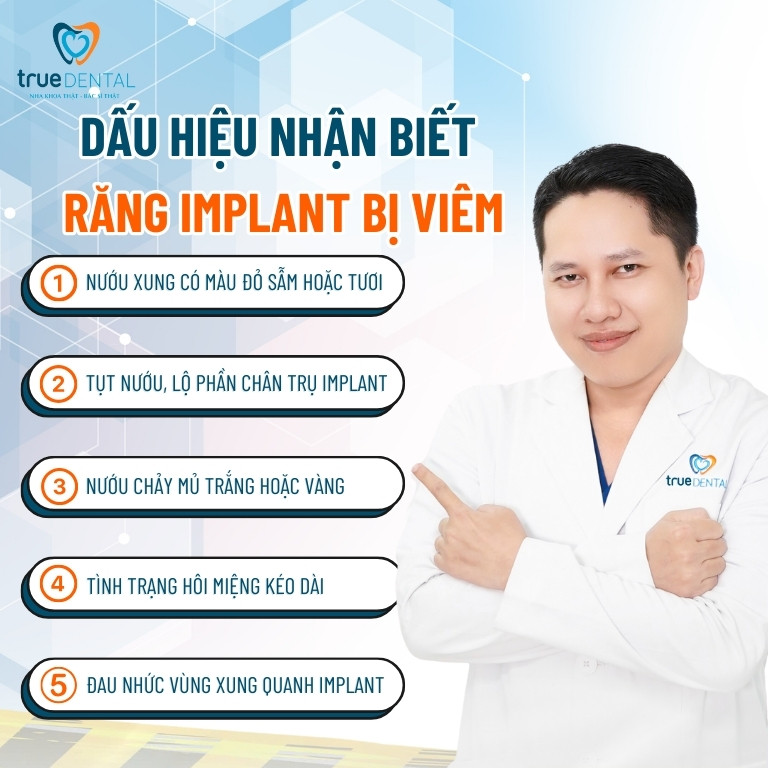
Peri-implantitis typically progresses asymptomatically in its initial stages (peri-implant mucositis). If left undetected, it advances to irreversible bone destruction and fixture loss. Patients should monitor closely for the following clinical warning signs:
- Erythematous (dark red or bright red), edematous peri-implant gingiva exhibiting bleeding on probing (BOP) or bleeding during routine toothbrushing.
- Gingival recession exposing the metallic collar or coronal threads of the implant fixture—a sign that compromises aesthetics and indicates underlying crestal bone resorption.
- Purulent exudate (white or yellowish pus) discharging from the peri-implant sulcus upon gentle pressure, accompanied by a foul taste.
- Persistent halitosis (bad breath) caused by anaerobic bacterial accumulation and suppuration that does not resolve with routine brushing or mouth rinses.
- Dull aching or sharp sensitivity around the implant site, particularly when applying occlusal pressure during mastication.
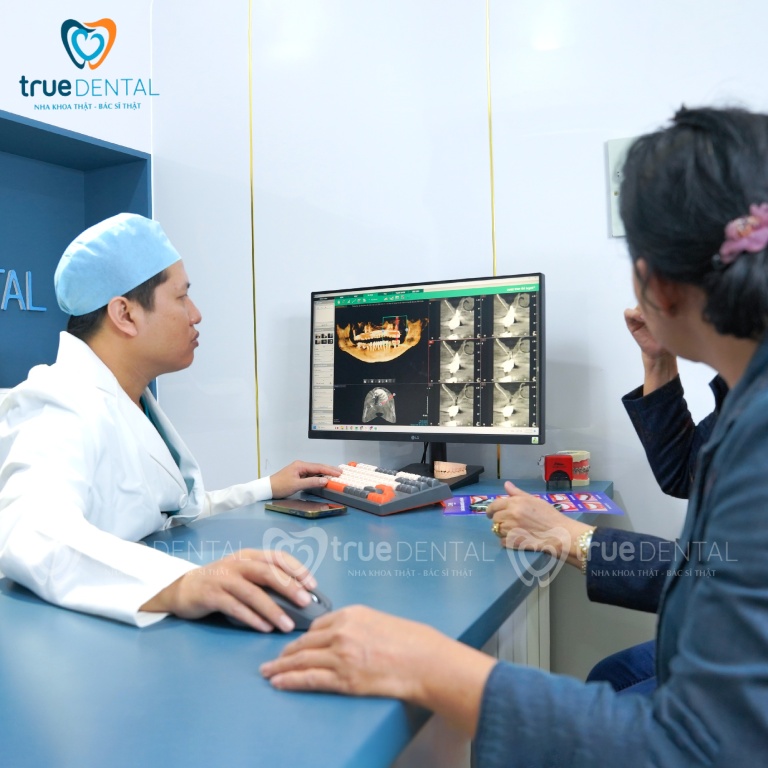
Because early clinical symptoms can be subtle, definitive diagnosis of peri-implant bone loss relies on radiographic evaluation using periapical X-rays or Cone Beam CT (CBCT) imaging. Routine follow-up visits at an accredited dental center are therefore indispensable.
Effective Clinical Management of Peri-Implantitis
Prompt, evidence-based intervention is essential to arrest disease progression, preserve the osseointegrated fixture, and prevent severe bone defects. Depending on pocket depth and radiographic bone loss severity, specialists implement targeted non-surgical or surgical protocols:
Non-Surgical Therapy
Non-surgical management is indicated for early-stage inflammation (peri-implant mucositis) or mild peri-implantitis without severe crater-like bone defects. The primary goal is complete biofilm disruption and surface decontamination:
- Mechanical Debridement & Surface Decontamination: Clinicians utilize specialized titanium or carbon-fiber ultrasonic tips, air-abrasive glycine/erythritol powder systems, and hand curettes to remove calculus and bacterial biofilm from peri-implant pockets without scratching the titanium surface.
- Antimicrobial & Antibiotic Therapy: Targeted local antiseptic irrigation (such as chlorhexidine) and systemic antibiotics are prescribed to eliminate anaerobic pathogens and resolve acute mucosal inflammation.
- Laser-Assisted Decontamination: Dental lasers effectively ablate bacterial biofilm on micro-textured implant threads while biostimulating soft tissue healing and reattachment.
Surgical Therapy
Surgical intervention is required for moderate-to-advanced peri-implantitis characterized by deep pockets and significant vertical or horizontal bone destruction:
- Open-Flap Debridement (Access Flap Surgery): The specialist elevates a mucoperiosteal flap for direct visual access to the defect, thoroughly removing granulation tissue, calculus, and contaminated biofilm while detoxifying the exposed fixture surface.
- Guided Bone Regeneration (Bone Grafting): When significant osseous defects surround a stable fixture, bone graft biomaterials and resorbable barrier membranes are placed to regenerate lost alveolar bone volume and re-establish structural support.
- Implant Explantation & Replacement: In terminal cases exhibiting severe bone loss (exceeding 50% of fixture length) or clinical fixture mobility, the compromised implant must be surgically explanted. Following complete site healing and bone regeneration, a new implant fixture can be placed to restore aesthetics and masticatory function.
Peri-implantitis is a serious clinical condition that should never be overlooked due to its impact on both oral structures and systemic health. Understanding its etiology, recognizing early symptoms, and seeking timely specialist care are the best ways to protect your investment. For a complimentary examination and personalized consultation, contact True Dental today via hotline 090 6636 456.

[Q&A] CAN YOU GET BRACES AFTER HAVING DENTAL IMPLANTS?
Many patients who have already restored missing teeth...
Sức Khỏe Răng Miệng
What is dental implant treatment? Key information and costs
What is dental implant placement? It is an...
Sức Khỏe Răng Miệng
IS DENTAL IMPLANT SURGERY PAINFUL? IMPORTANT THINGS TO KNOW
Dental implant placement is a widely chosen restorative...
Sức Khỏe Răng Miệng
All-on-6 Dental Implants: Procedure, Costs, and Important Considerations
All-on-6 dental implant placement is a comprehensive restorative...
Sức Khỏe Răng Miệng
DENTAL IMPLANTS – THE PERFECT SOLUTION FOR REPLACING MISSING TEETH
Today, dental implant placement has become increasingly popular...
Sức Khỏe Răng Miệng
How long does it take to complete the process of getting dental implants?
Tooth replacement affects far more than just smile...
Tôi đang tìm 1 Nha Khoa để điều trị cho tôi, nhưng rất lo lắng và sợ gặp phải NHA TẶC hoặc bị chèo kéo.
HÃY GIÚP TÔI TƯ VẤN THẬT
254 Điện Biên Phủ, Xuân Hòa, TP.HCM
HƯỚNG DẪN ĐƯỜNG ĐI